


News Details
IDiPD participated in the seminar “Life Path without Interruption, is it possible for PCDI?”
Updated : 26/03/2026
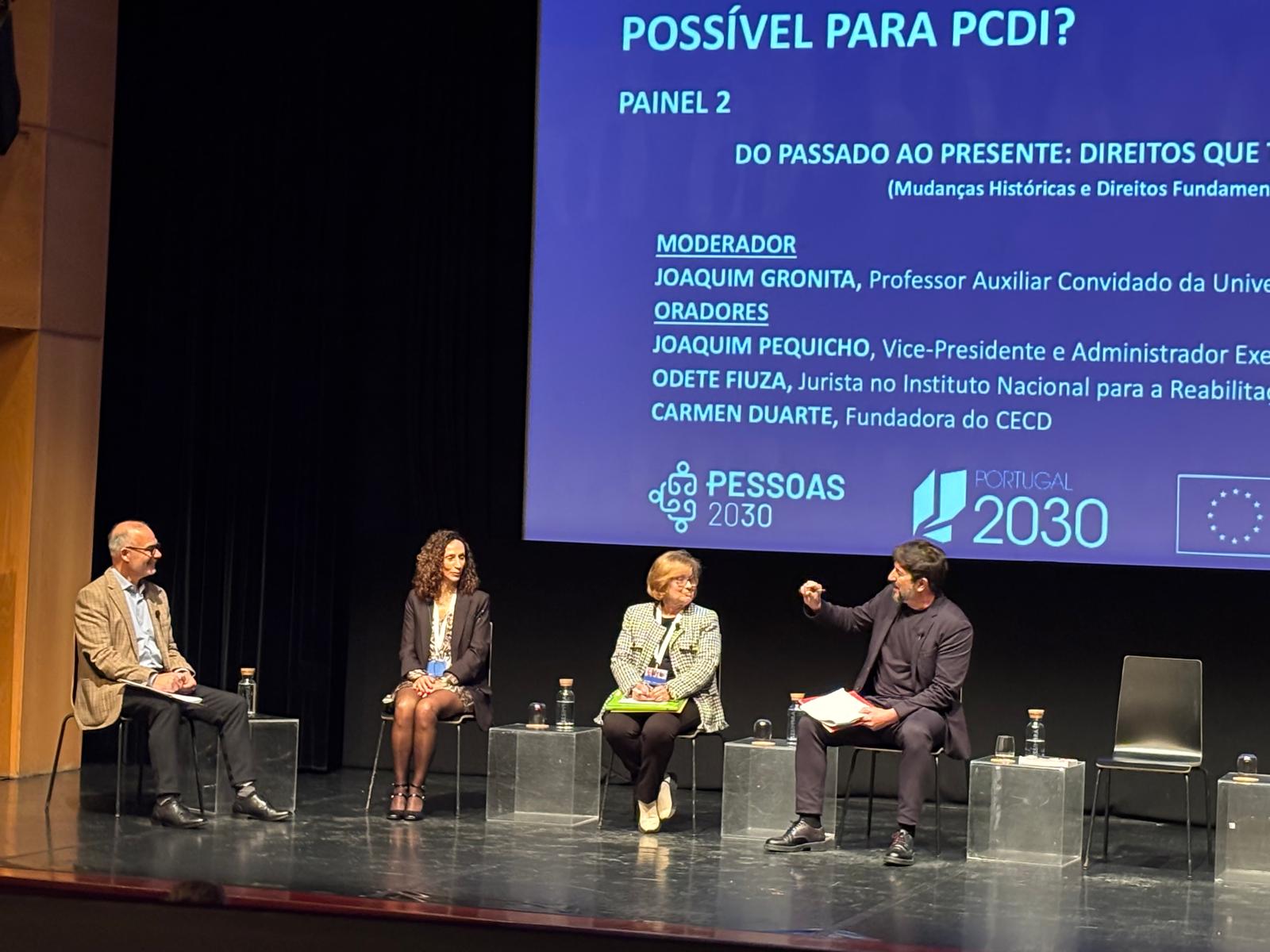
O Institute for the Rights of Persons with Disabilities participated in the seminar “Life-course without interruption, is it possible for PCDI?”, held on March 3, at the Cineteatro Municipal João Mota, in Sesimbra. The Institute was represented by Odete Fiuza No Panel 2 – “From Past to Present: Rights that Transform (Historical Changes and Fundamental Rights of Persons with Disabilities in Portugal)”.
In his speech, Odete Fiuza highlighted that the Institute for the Rights of Persons with Disabilities, which succeeds the National Institute for Rehabilitation, entered into force on the day 1 March, strengthening the alignment of national policies with Portugal's international commitments, in particular the Convention on the Rights of Persons with Disabilities and the European Strategy for the Rights of Persons with Disabilities 2021-2030, within the framework of a human rights-based paradigm.
He also stressed the role of national strategies as tools for managing and guiding public action, enabling priorities to be set, policies to be articulated and more effective responses to inclusion to be promoted.
With regard to National Strategy for the Inclusion of Persons with Disabilities 2021-2025, indicated that an overall assessment of its impact is not yet possible as it is in place.
Preparing for the future Strategy for the Rights of Persons with Disabilities 2026-2030, Odete Fiuza stressed that the process is being developed in a collaborative way, involving the various governmental areas and the Disability organisations, This will ensure that all actors take ownership of the policy instrument and are actively involved in its implementation.
The speech ended with an appeal to the involvement of all institutional actors and civil society implementing the new Strategy, underlining that this collective commitment is essential to promote real social change, with real gains in realising the rights of persons with disabilities and improving their quality of life and their families.