


National Institute for Rehabilitation
Planning, Coordination and Implementation of National Policies for the Promotion of the Rights of Persons with Disabilities

World Braille Day: Technology and Inclusion under Debate - Join the Braille and Artificial Intelligence Webinar
On the day 4 January , we celebrate the World Braille Day , a greater symbol of literacy, autonomy and inclusion for blind and low-sighted people. In an increasingly digital world, Braille remains an essential tool for ensuring access to information, communication and full participation in society. As Mary Pat Radabaugh said in 1993: “For most people, technology makes things easier; for people with disabilities, technology makes things possible.” This idea is particularly relevant when we think of the convergence between Braille e Artificial Intelligence (AI) . Far from posing a threat, technological innovation can open up new opportunities to strengthen Braille reading and writing by promoting inclusive and accessible solutions. In order to deepen this reflection, the National Institute for Rehabilitation, I.P. (INR), and Core for Braille and Leit's Complementary Means ura , organise an webinar Dedicated to the topic on the day 15 January 2026 . This event will: Explore How AI Can Power Braille , automating processes and facilitating the production of accessible materials; Submit academic, pedagogical and user perspectives ; Discuss Future scenarios for a more inclusive society. Panel of Experts: Moderator: Rui Batista (Núcleo Braille) Speakers: Ângelo Abrantes – Retired lecturer and proficient Braille user; Isabel Anacleto - Professor of Special Education in the Field of Vision; Rafael Martins – Dorina Nowill Foundation for the Blind (Brazil) and Tiago Guerreiro – Associate Professor in the Department of Informatics of the Faculty of Sciences of the University of Lisbon Webinar: Braille and Artificial Intelligence – Opportunities and Challenges Date: 15 January 2026 (Thursday) Time: 17h00 – 18h30 (Continental Portugal) | 14h00 – 15h30 (Brasília – Brazil) Format: Online, via Zoom Webinar Duration: 1.30 a.m. Link to registration: https://tinyurl.com/yuv36udd Sign up and join us in this reflection on technology, accessibility and inclusion!
View highlight details European Day Of Persons With Disabilities, 4-5 December 2025
As part of the celebrations of the 3rd of December, International Day of People with Disabilities, the National Institute for Rehabilitation, I.P. (INR, I.P.) was represented at international level, at the invitation of the European Commission. European Day of Persons with Disabilities , which took place on Brussels, 4-5 December 2025 . It is an annual conference organised by the European Commission in partnership with the European Disability Forum. dedicated to promoting rights, inclusion and accessibility for persons with disabilities in the European Union. The event brought together politicians, experts, representatives of civil society organisations and persons with disabilities to discuss key topics related to the implementation of the EU Strategy for the Rights of Persons with Disabilities 2021-2030. This year, on the first day of the event, 4 December 2025 , the topics covered in three separate panels were as follows: Panel 1 - Addressed the next chapter in the implementation of the Strategy for the Rights of Persons with Disabilities 2021-2030 where it was possible to deepen how the European Union (EU) and its Member States can further promote the implementation of the Strategy for the Rights of Persons with Disabilities, ensuring that it translates into tangible improvements in its eight areas, including accessibility, independent living and equal participation. Panel 2 - Financing the Union of Equality: towards an inclusive EU budget for persons with disabilities. It looked at how EU financial instruments have driven and can continue to drive real change for persons with disabilities, for example by ensuring that accessibility and inclusion are systematically integrated into EU funding. The discussion addressed how EU funds, including cohesion policy, social funds and other EU instruments, can align with the objectives of the Strategy for the Rights of Persons with Disabilities. Panel 3 - Inclusive crisis preparedness and management for persons with disabilities. This panel focused on how the EU and its Member States can ensure the inclusion of persons with disabilities in emergency preparedness and crisis management, building on lessons learned from recent crises. Speakers highlighted, among other things, the need for accessible early warning systems, inclusive civil protection measures and the active involvement of persons with disabilities in planning and response efforts to ensure resilience, security and equal protection for all during emergencies. No second day of the event, 5 December 2025 , a the Ceremony of Delivery Access City Award 2026 , an annual award promoted by the European Commission in cooperation with the European Disability Forum to recognise EU cities that show leadership and best practices in promoting urban accessibility for people with disabilities. The INR, I.P. was for the first time invited by the European Commission to participate as a national jury of the Portuguese cities in the competition, namely: Guimarães and Braga. This year's Access City Award 2026 had five finalist cities: Piacenza (Italy); Rennes (France); Salzburg (Austria); Valencia (Spain); and Zaragoza (Spain). The winning cities were: 1st place: Zaragoza (Spain), recognised for its integrated model of urban accessibility and strategic leadership in inclusive public policies; 2nd place: Valencia (Spain), highlighted by the high level of urban accessibility and inclusive transport infrastructure; 3rd place: Rennes (France), awarded for coordinated improvements in transport and public buildings. Special Mentions were also awarded to the following cities for achievements in specific areas, namely: Salzburg (Austria), Special mention for Accessibility in Housing; Valencia (Spain), Special Mention for Emergency Preparedness; Piacenza (Italy), Special Mention for Accessibility in Information and Communications. The event is available for viewing on the first day, 4 December 2025. HERE , and the second day, 5 December 2025, HERE .
View highlight details 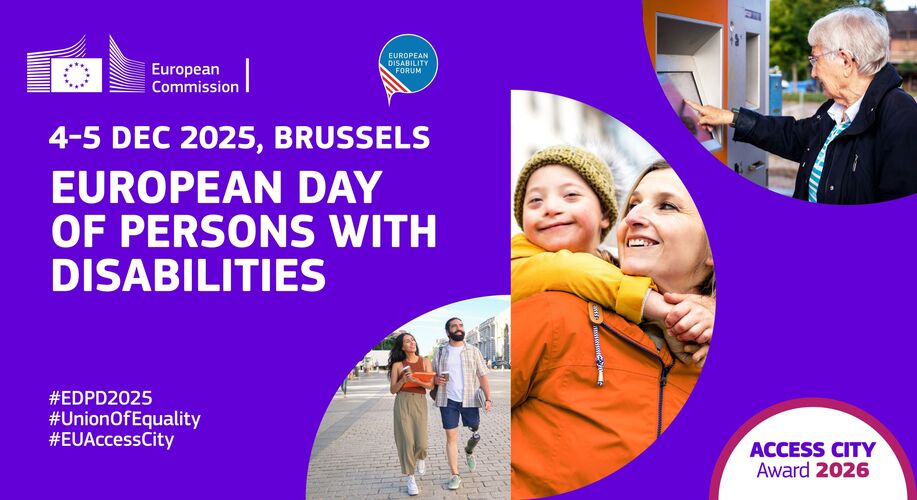

Informal Caregiver Status – Amendments
As part of the administrative reform, a series of amendments were published on 24 December under: ESPAP, GERAP, ANCP, SGeral, CCDR, AII (FCT and ANI) within the Government, the Services of the Assembly of the Republic and the General Secretariat of the Presidency of the Republic. The diplomas were: Amends the support allowance for the primary informal caregiver by integrating it into the family protection subsystem in the context of possible dependency charges and not into the solidarity subsystem, which amends the legal regime establishing the Informal Caregiver Statute and its regulations; Updates the amount of the guaranteed minimum monthly wage to €920 as of 1 January 2026; It determines the normal age of access to old-age pension in 2027 at 66 years and 11 months. See the documents below: Decree-Law No 138/2025 of 29 December 2025 (Informal Caregiver Statute) ; Ministerial Implementing Order No 476/2025/1 of 29 December (Retirement age) ; Decree-Law No 139/2025 of 29 December 2025 (minimum monthly remuneration) .
View highlight details Extension ENIPD 2021-2025
The National Strategy for the Inclusion of Persons with Disabilities 2021-2025 was extended until the entry into force of the Strategy for the Rights of Persons with Disabilities 2026-2030. Consult the diploma of DR 1st Series No. 246, of 23/12/2025 HERE .
View highlight details 
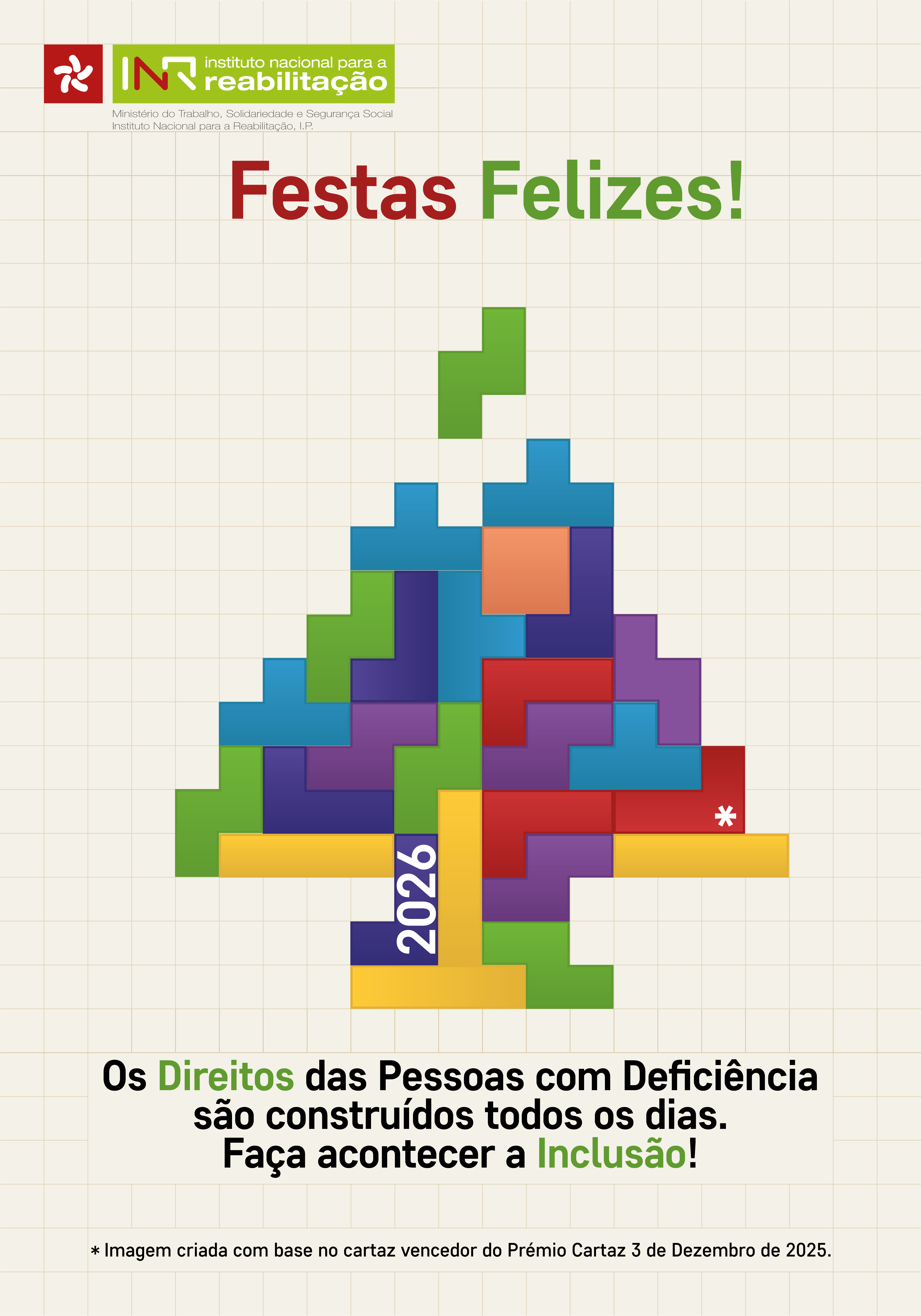
Happy holidays!
The National Institute for Rehabilitation, I.P., wishes Happy Holidays! Access the Postal in accessible format HERE .
View highlight details Prémio Ciências Sociais e Humanas para a Inclusão distingue excelência da investigação académica na área da deficiência
O júri do Prémio Ciências Sociais e Humanas para a Inclusão, promovido pelo Instituto Nacional para a Reabilitação, I.P.(INR), deliberou atribuir, após apreciação dos trabalhos submetidos, os seguintes prémios e menções honrosas: Categoria A - Dissertações de mestrado e teses de doutoramento Prémio “Combinar o Design e a Autoetnografia para melhorar a Experiência de Pacientes com Deficiência Visual em Ambiente Hospitalar: um Estudo de Caso de Sensibilização baseado na perspetiva de um Patient Innovator” , trabalho de Raquel Marques. 1.ª Menção Honrosa Por unanimidade, e atendendo à igualdade de classificação final, o júri atribuiu esta distinção a dois trabalhos: “Para lá dos silenciamentos. Sofrimento mental, integralidade e (im)possibilidades de uma ecologia de cuidados” , de Cláudia Nogueira; “Uncovering the city’s hidden data: An exploratory study to improve the accessibility of datawalks for blind and visually impaired people” , de Sofia Gonçalves. 2.ª Menção Honrosa: “Estudo comparativo da utilização de livros multiformato em formato digital e físico por pessoas com dificuldades intelectuais e desenvolvimentais” , de João Pinheiro Categoria B - Projetos de Investigação Prémio “Social Representations of Sexual Assistance Services for People with Physical Disabilities in the Context of Portugal” , submetido por Ana Catarina Pinho (coautora). Menção Honrosa “Biomarcadores de Habilidades Sociais e Comunicação em bebês. Intervenção Precoce como redução de danos” , de Aliny Carvalho. Relativamente à atribuição da 2.ª menção honrosa na Categoria B, o júri deliberou, por unanimidade, não proceder à sua atribuição, por considerar que os restantes trabalhos apresentados não cumpriam, de forma adequada, os objetivos definidos no Regulamento do Prémio, nos termos do n.º 4 do artigo 6.º. O Prémio Ciências Sociais e Humanas para a Inclusão, promovido e atribuído pelo INR, é uma iniciativa que nasceu como forma de distinguir trabalhos académicos e de investigação de excelência, no domínio da inclusão das pessoas com deficiência, incentivando a produção e disseminação de conhecimento científico relevante nesta área. A cerimónia pública de entrega dos prémios e menções honrosas terá lugar em data a anunciar brevemente.”
View highlight details 
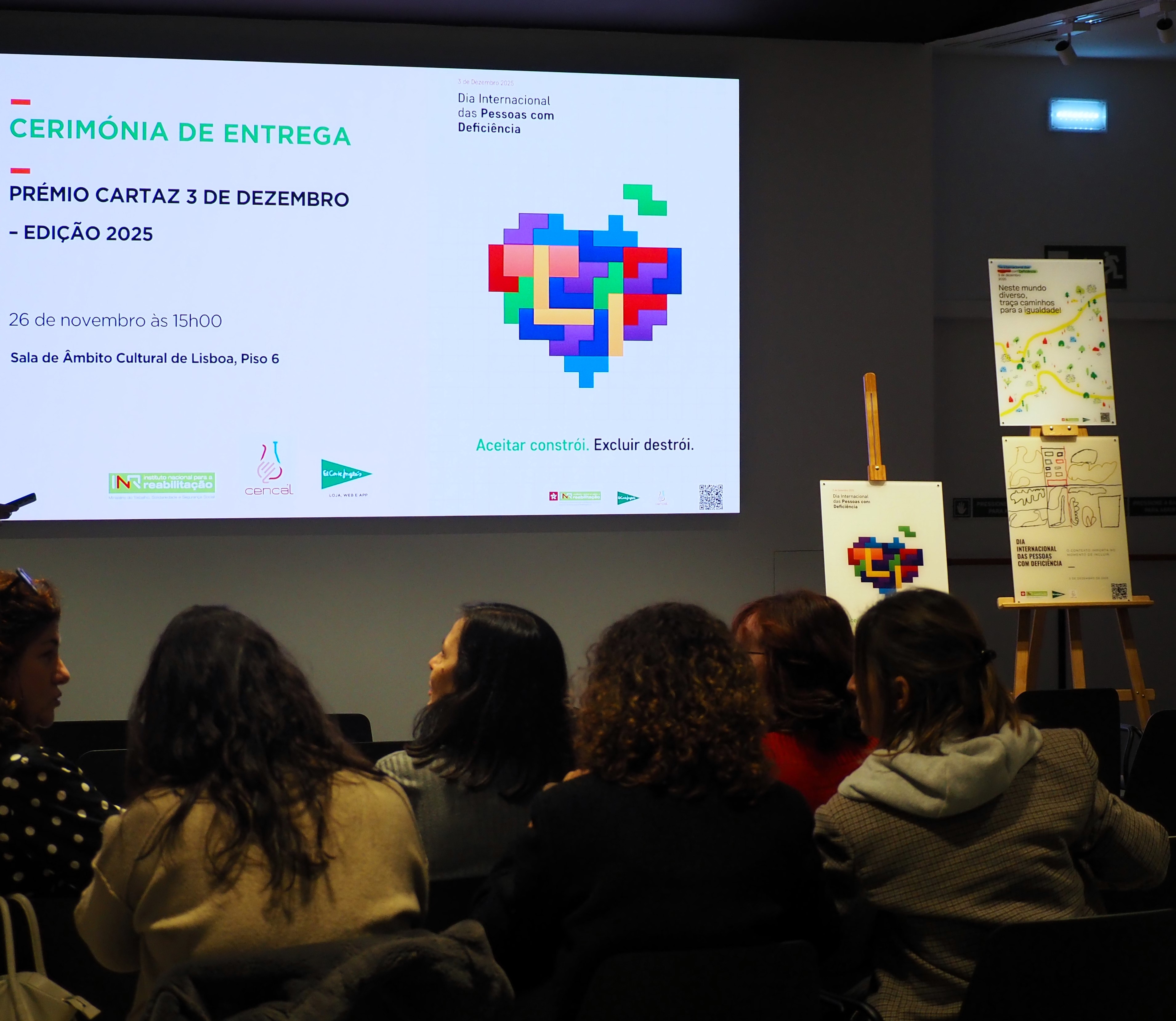
Entrega do Prémio Cartaz 3 de dezembro
O Prémio Cartaz 3 de Dezembro foi entregue no dia 26 de novembro, no auditório “Espaço Cultural” do El Corte Inglés. A sessão iniciou-se com a intervenção de Vasco Marques Pinto – Coordenador de Sustentabilidade do El Corte Inglés, seguida da exibição dos vídeos das Menções Honrosas. Após a entrega dos prémios, Marina Van Zeller - Vice-Presidente do Instituto Nacional para a Reabilitação, I.P. (INR) e Presidente do Júri, encerrou o evento, sublinhando a importância deste prémio ao longo das suas edições. Na edição de 2025, o primeiro prémio foi atribuído ao cartaz “Aceitar constrói. Excluir destrói” , da autoria de Nuno Filipe Lourenço Bentes . As Menções Honrosas distinguiram Luísa Castro Portugal Ferreira , com o cartaz “Neste mundo diverso, traça caminhos para a igualdade” , e a Associação Pais em Rede – Núcleo de Aveiro , com o cartaz “O contexto importa no momento de incluir” . Os prémios atribuídos foram: 1.º lugar : €1.500 atribuídos pelo INR, um cartão presente de €1.500 oferecido pelo El Corte Inglés e uma peça de arte do CENCAL – Centro de Formação Profissional para a Indústria Cerâmica. Menções Honrosas : um cartão presente de €250 do El Corte Inglés e uma peça de arte do CENCAL. O Prémio Cartaz 3 de Dezembro tem como objetivo valorizar trabalhos gráficos que, através de um cartaz, promovam a sensibilização da opinião pública para o reconhecimento dos direitos das pessoas com deficiência. Saiba mais informações sobre este prémio AQUI .
View highlight details SAPA Funds Reinforcement
We inform you that Order No. 15038/2025 was published in the Official Gazette No. 243/2025 of 18 December - 2nd Series, regarding the reinforcement of the funds allocated to the System for the Allocation of Support Products (SAPA), for the year 2025, which can be consulted HERE .
View highlight details 

EPSCO Council on Employment and Social Policy took place on 1 December
The Employment, Social Policy, Health and Consumer Affairs (EPSCO) Council on Employment and Policy took place on 1 December 2025 in Brussels. At the last EPSCO Council under the Danish Presidency (PRES DK) of the Council of the European Union, conclusions on the future European Affordable Housing Plan were presented, highlighting here that housing policy remains the responsibility of Member States, ministers pointed to a number of areas where the Commission could support national, regional and local efforts, such as facilitating access to EU funding, in particular in four main focus areas: financing, construction and sustainability, planning and social inclusion. On the Equal Treatment Directive ministers took note of a progress report on the proposal for a directive on equal treatment It will prohibit discrimination on the grounds of religion or belief, disability, age or sexual orientation in areas related to social protection, social benefits, education and access to goods and services, including housing. The purpose of PRES DK was to reach a general approach on this proposal at the EPSCO Council meeting on 1 December. However, during the discussions in the Social Questions Working Party, three delegations maintained general reservations, indicating that the necessary unanimity could not yet be reached. Nevertheless, the vast majority of delegations continue to support the latest compromise text and the objective of reaching a general approach in the Council. The Danish Presidency firmly believes that in a world where fundamental rights and equality are increasingly under pressure, the EU should set an example. The Council agreed its negotiating position on a regulation aimed at extending the scope of the European Globalisation Adjustment Fund (EGF) to include workers at imminent risk of dismissal. The aim of the EGF is to show solidarity with workers and the self-employed who have lost their jobs as a result of the restructuring of the company by helping them to return to the labour market. Under the revised Regulation, workers at imminent risk of losing their jobs as a result of the restructuring of the company would also have access to support under the EGF in order to reduce the rate of dismissal and help workers transition to new jobs. The Council position clarifies the scope of the revised Regulation. It also ensures sufficient safeguards, limits the administrative burden and sets a funding ceiling of EUR 4 million per year for a given company. Finally, the Commission presented the European Semester Autumn Package This includes the Joint Employment Report and a proposal for a recommendation on human capital in the EU. Ministers also exchanged views on promoting social inclusion and cohesion through coherent social and housing policies. Watch the debate at: Recording of the morning public debate here . Recording of the afternoon public debate here .
View highlight details Planeamento Centrado na Pessoa em destaque em encontro internacional organizado pelo Instituto Nacional para a Reabilitação, I.P.
O Instituto Nacional para a Reabilitação, I.P. (INR, I.P.) realizou, no passado dia 19 de novembro de 2025, no Auditório do Instituto do Emprego e Formação Profissional (IEFP), em Xabregas, Lisboa, o Encontro Técnico-Científico subordinado ao tema “A Centralidade da Pessoa no Paradigma dos Direitos Humanos”. A iniciativa contou com a parceria do Observatório da Deficiência e Direitos Humanos (ISCSP – Universidade de Lisboa), do Núcleo de Estudos da Deficiência do ISCTE e da ASSOL – Associação de Solidariedade Social de Lafões, entidades com trabalho reconhecido nas áreas da deficiência e dos direitos humanos. O encontro reuniu oradores nacionais e internacionais que partilharam conhecimento científico, práticas profissionais e testemunhos na primeira pessoa, reforçando o compromisso coletivo com a construção de políticas públicas e práticas que promovam a inclusão e os direitos das Pessoas com deficiência ou incapacidade. A abertura da sessão esteve a cargo de Sónia Esperto, Presidente do Conselho Diretivo do Instituto Nacional para a Reabilitação, I.P. Os trabalhos continuaram com a palestra de Jack Pearpoint, que se debruçou sobre o significado d’A Centralidade da Pessoa e do Planeamento Centrado na Pessoa, partindo dos métodos MAPS (McGill Action Planning System) e o PATH (Planning Alternative Tomorrows with Hope), de cuja criação fez parte. O autor destacou como estas metodologias ajudam a construir comunidades inclusivas, valorizando os sonhos das pessoas, reconhecendo as suas capacidades e promovendo relações significativas. O propósito é combater a solidão e exclusão, semeando possibilidades e apoiando cada pessoa a contribuir e pertencer plenamente à sociedade. O primeiro painel contou com Mário Pereira, da ASSOL, que destacou o papel do planeamento individualizado na definição de percursos de vida para adultos com deficiência. Destacou ainda o papel dos profissionais como facilitadores e mobilizadores de recursos, promovendo soluções personalizadas e a participação plena da pessoa na comunidade e no emprego. Seguiu-se a intervenção de Paula Santos, da Universidade de Aveiro, que apresentou iniciativas de inclusão no ensino superior dirigidas a estudantes com dificuldades intelectuais e do desenvolvimento, como o InclUA e o programa PIEM. Os projetos demonstram o impacto positivo de abordagens inovadoras e da colaboração institucional na promoção da aprendizagem, participação cívica e empregabilidade. A palestra inicial e o primeiro painel foram organizados e dinamizados por Sofia Simões Ferreira, Diretora Executiva da ASSOL. A sessão da tarde iniciou-se com a intervenção de Patrícia Neca, do Observatório da Deficiência e Direitos Humanos, que moderou o painel dedicado às lições retiradas de práticas nacionais e internacionais. Eduarda Sousa Pires, do Centro de Administração e Políticas Públicas da Universidade de Lisboa, e Jan Šiška, Professor na Charles University (Praga) e na Minnesota University (EUA), defenderam a necessidade de recorrer à recolha de dados robustos para suportar políticas inclusivas. Partilharam ainda experiências bem-sucedidas na transição para a vida adulta, no emprego inclusivo e na cooperação entre academia, serviços e decisores políticos. O último painel reuniu Joana Morais e Castro (Universidade Católica do Porto), José Miguel Nogueira (ISCTE), Sandra Marques (Inclusion Europe) e Liliana Sintra (Câmara Municipal de Cascais) - sob a batuta de Luís Capucha, do Núcleo de Estudos da Deficiência do ISCTE - Instituto Universitário de Lisboa - para debater os desafios na implementação de políticas públicas verdadeiramente orientadas para as necessidades individuais. As intervenções destacaram a relevância da coordenação interinstitucional, da descentralização e da avaliação de impacto, bem como da participação ativa das próprias pessoas com deficiência. Entre as recomendações apresentadas, salientaram-se o reforço de parcerias, a capacitação técnica e a criação de mecanismos de monitorização eficazes. O Encontro Técnico-Científico - encerrado pela Vice-Presidente do Conselho Diretivo do INR, I.P., Marina Van Zeller - reafirmou o compromisso coletivo de promover políticas e práticas que garantam a plena participação das pessoas com deficiência na sociedade. Ao longo do dia, ficou evidente a importância da colaboração entre instituições, da produção de conhecimento rigoroso e da valorização das próprias pessoas como protagonistas das suas vidas. A iniciativa reforçou a necessidade de continuar a investir em modelos de intervenção inclusivos e em estratégias que assegurem que os direitos humanos são, efetivamente, uma realidade para todos.
View highlight details 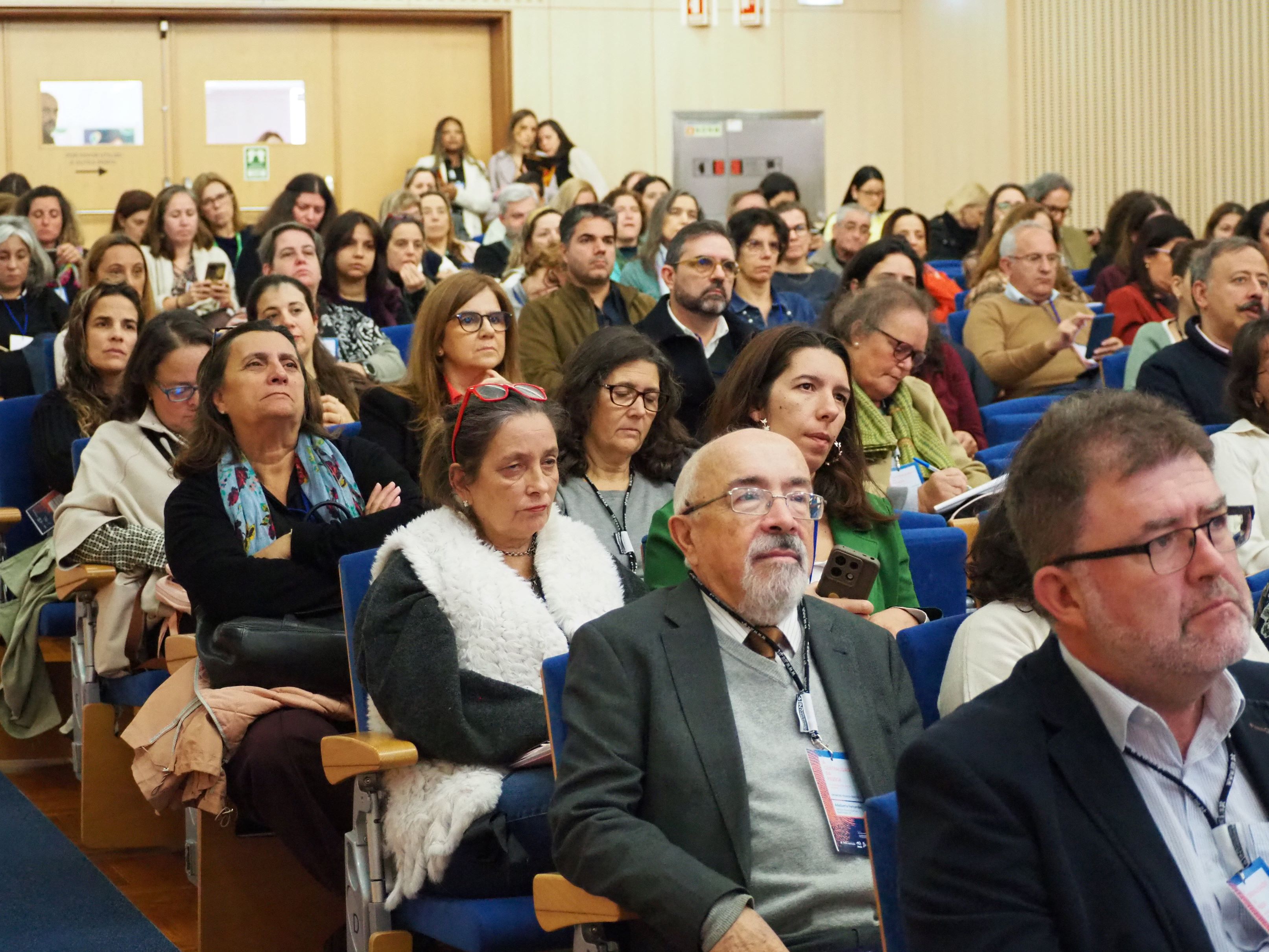
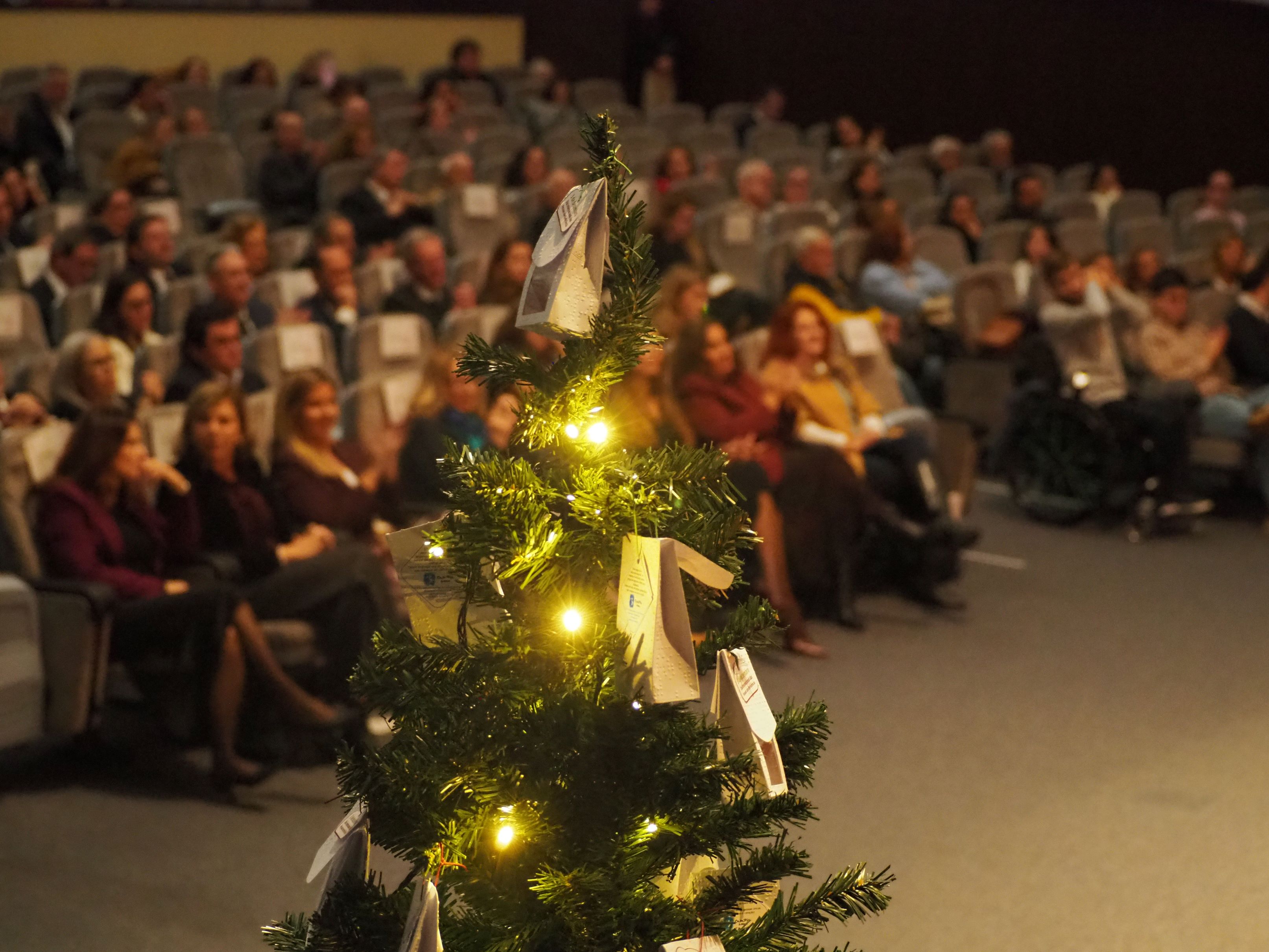
I Gala do Dia Internacional das Pessoas com Deficiência em Lisboa
No passado dia 3 de dezembro, Lisboa foi palco da I Gala Comemorativa do Dia Internacional das Pessoas com Deficiência, organizada pelo Instituto Nacional para a Reabilitação, I.P., em parceria com a Casa Pia de Lisboa, I.P., e a Câmara Municipal de Lisboa, a convite da Ministra do Trabalho, Solidariedade e Segurança Social. A iniciativa reuniu diversas entidades, artistas e representantes institucionais para celebrar a inclusão e os direitos das pessoas com deficiência. O evento teve início ao final da tarde, com a receção e o acolhimento dos participantes. Seguiu-se a sessão de boas-vindas, conduzida por Maria Luísa Aldim, Vereadora do Desenvolvimento Social e Inovação da Câmara Municipal de Lisboa. A abertura oficial da gala contou com intervenções de Maria do Rosário Palma Ramalho, Ministra do Trabalho, Solidariedade e Segurança Social, e de Margarida Balseiro Lopes, Ministra da Cultura, Juventude e Desporto, que sublinharam a importância da solidariedade, da cultura e do desporto na promoção da inclusão. A Gala teve a apresentação de Leonor Belo e Marina Caldas, numa noite que marcada por diversos momentos culturais, que começaram com as atuações da Orquestra de Cordas do Curso Básico de Música da Casa Pia de Lisboa, da Plural – Companhia de Dança da Fundação LIGA e do Projeto Mãos que Cantam. Seguidamente foram projetados dois vídeos, sobre o processo de criação do painel de azulejos comemorativo desta efeméride, realizado por educandos surdos e surdocegos da Casa Pia de Lisboa, e com a lembrança dada aos convidados, com o desenho do logótipo do dia 3 dezembro, assim como um vídeo representativo das atividades e iniciativas dedicadas às pessoas com deficiência, que as ONG asseguram ao longo do ano. O programa seguiu com a participação do grupo musical Os Curiosos, do Centro de Reabilitação e Integração de Deficientes de Cascais e com momentos de humor com o comediante Sérgio Lopes. O artista Bluay e uma atuação desportiva da Casa Pia de Lisboa completaram os momentos culturais. O evento terminou com agradecimentos e um brinde coletivo, reforçando o compromisso de todas as pessoas com uma sociedade mais inclusiva e participativa. A Gala foi o ponto alto de um conjunto de eventos inseridos nas Celebrações do 3 de dezembro, Dia Internacional das Pessoas com Deficiência, com uma agenda diversificada de atividades, que incluíram iniciativas desportivas, conferências, seminários, jogos, workshops , entre outros, que tiveram o seu início no passado mês de outubro. Veja a galeria das fotos AQUI .
View highlight details INR promotes session “Multiformato e Inclusão: The new era of accessible literature” at the Abade Correia da Serra Municipal Library in Serpa
On 28 November, the Abade Correia da Serra Municipal Library in Serpa hosted the session ‘Multiformato e Inclusão: The new era of accessible literature”, a joint initiative of the Library of the National Institute for Rehabilitation, I.P. (INR), and the Municipal Library itself, in partnership with the Resource Centre for Digital Inclusion of the Polytechnic Institute of Leiria (CRID-IPL) and the Centre for Education and Development António Aurélio da Costa Ferreira (CED AACF), of Casa Pia de Lisboa. The opening was in charge of Miguel Bentes, Director of the Municipal Library, and Sónia Esperto, President of the INR, who highlighted the impact of multiformat books in promoting equal opportunities, reinforcing that literacy and cultural participation are effective rights for all People. During the morning, the session was led by Célia Sousa, Coordinator of CRID-IPL, and Paula Liques, Technical Director of CED AACF, and addressed to professionals of public and school libraries, reading mediators and those responsible for educational services. The objective was to disseminate the importance of multiformat books in the collections and share good practices that promote inclusion and universal access to reading, highlighting the essential role of libraries in the democratization of literature. In the afternoon, the activities were aimed at primary school children, families, reading mediators and the educational community. INR and Casa Pia techniques boosted sensory and practical experiences, such as ‘Hora do Conto em multiformato’, ‘Vamos stroll’, ‘Lego Braille Bricks’ and ‘Caixa dos Sentidos’, allowing participants to learn about accessible reading, write the name in braille and Portuguese sign language, walk through spaces with blindfolded barriers and explore elements of nature through touch. CRID, represented by Célia Sousa, and CED AACF, by Paula Liques, offered the Municipal Library a set of multi-format books, reinforcing the commitment to inclusion. This day was marked by sharing, reflection and commitment, highlighting the commitment of the institutions involved in building more inclusive libraries, capable of responding to the needs of all People, regardless of their abilities or condition. The partnership between INR, CRID and CED AACF will continue to drive initiatives that promote access to reading for all.
View highlight details 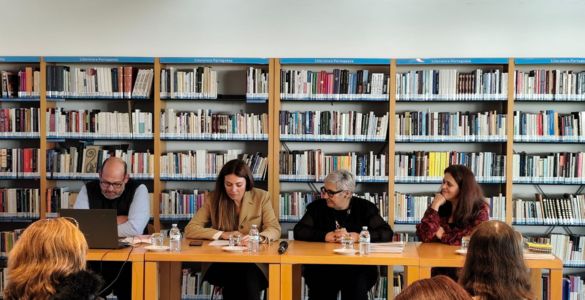
Visita do Projeto Clube de Cidadania ao INR
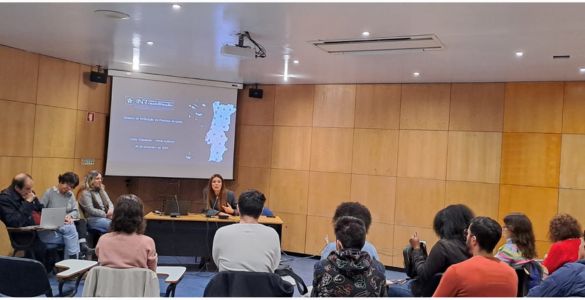
O Instituto Nacional para a Reabilitação, I.P. recebeu, no dia 26 de novembro, a visita do Projeto Clube de Cidadania – Eu tenho direito a ter direitos!, promovido pela Inovar Autismo. Este projeto, cofinanciado pelo INR, tem como objetivo testar uma metodologia piloto e inovadora de empoderamento de jovens autistas enquanto autorrepresentantes e ativistas defensores de seus direitos humanos, cívicos, sociais e políticos. A visita, inserida na terceira fase do projeto que contempla desenvolvimento no terreno de ações de iniciativa teórico prática, contou com a presença de várias pessoas que integram o projeto. Após o acolhimento pela Presidente deste Instituto, seguiu-se uma breve exposição sobre diversas temáticas, como a queixa por discriminação, produtos de apoio, vida indepentente, festivais acessíveis e formação. De seguida, realizou-se a visita à sala de atendimento do Balcão da Inclusão, Biblioteca e à sala de gravação da Língua Gestual Portuguesa. Desta forma, todas as pessoas puderam conhecer melhor os seus direitos e tomar contacto com diversos serviços e apoios disponíveis, fortalecendo o seu conhecimento, autonomia e competências para exercer uma cidadania ativa. Para mais informações sobre o projeto: https://www.inovarautismo.pt/projeto/clube-de-cidadania-direito-a-ter-direitos/
View highlight details INR e ASSOL promoveram 3 dias de formação dedicados ao Planeamento Centrado na Pessoa com Jack Pearpoint e Lynda Kahn
O Instituto Nacional para a Reabilitação, I.P. dinamizou em parceria com a ASSOL - Associação de Solidariedade Social de Lafões três dias de formação dedicados ao Planeamento Centrado na Pessoa. Nos dias 20 e 21 de novembro, decorreu no auditório do INR, I.P. um curso que juntou profissionais de várias organizações e regiões do país, que aprofundaram e aprenderam a utilizar o Planeamento Centrado na Pessoa como metodologia de trabalho. De cariz iminentemente prático, este curso apresentou às pessoas participantes os valores básicos da inclusão e do trabalho centrado na pessoa, ofereceu uma introdução à facilitação e registo gráfico, desenvolveu competências em facilitação de processos, apresentou e utilizou ferramentas para aprofundar a prática da escuta, além de demonstrar uma das abordagens do Planeamento Centrado na Pessoa – a utilização do PATH (Planning Alternative Tomorrows with Hope). Já na manhã do dia 22, realizou-se um encontro onde pessoas com deficiência e famílias tiveram a oportunidade de aprender, partilhar experiências e preparar juntos o caminho para um futuro mais inclusivo. Ambos os momentos foram dinamizados por Jack Pearpoint e Lynda Kahn, precursores da metodologia do Planeamento Centrado na Pessoa, que ao longo de três dias partilharam o conhecimento acumulado de mais de 40 anos de experiência em contextos institucionais e comunitários, utilizando o Planeamento Centrado na Pessoa para promover mudanças individuais e organizacionais. Os autores ofereceram ainda um exemplar do livro “The PATH & MAPS Handbook: Person-Centered Ways to Build Community” à Biblioteca do INR, I.P., que dispõe de vários recursos sobre a temática, que podem ser consultados AQUI . Foram três dias excecionais e de grande aprendizagem que ficarão certamente na memória de todas as pessoas.
View highlight details 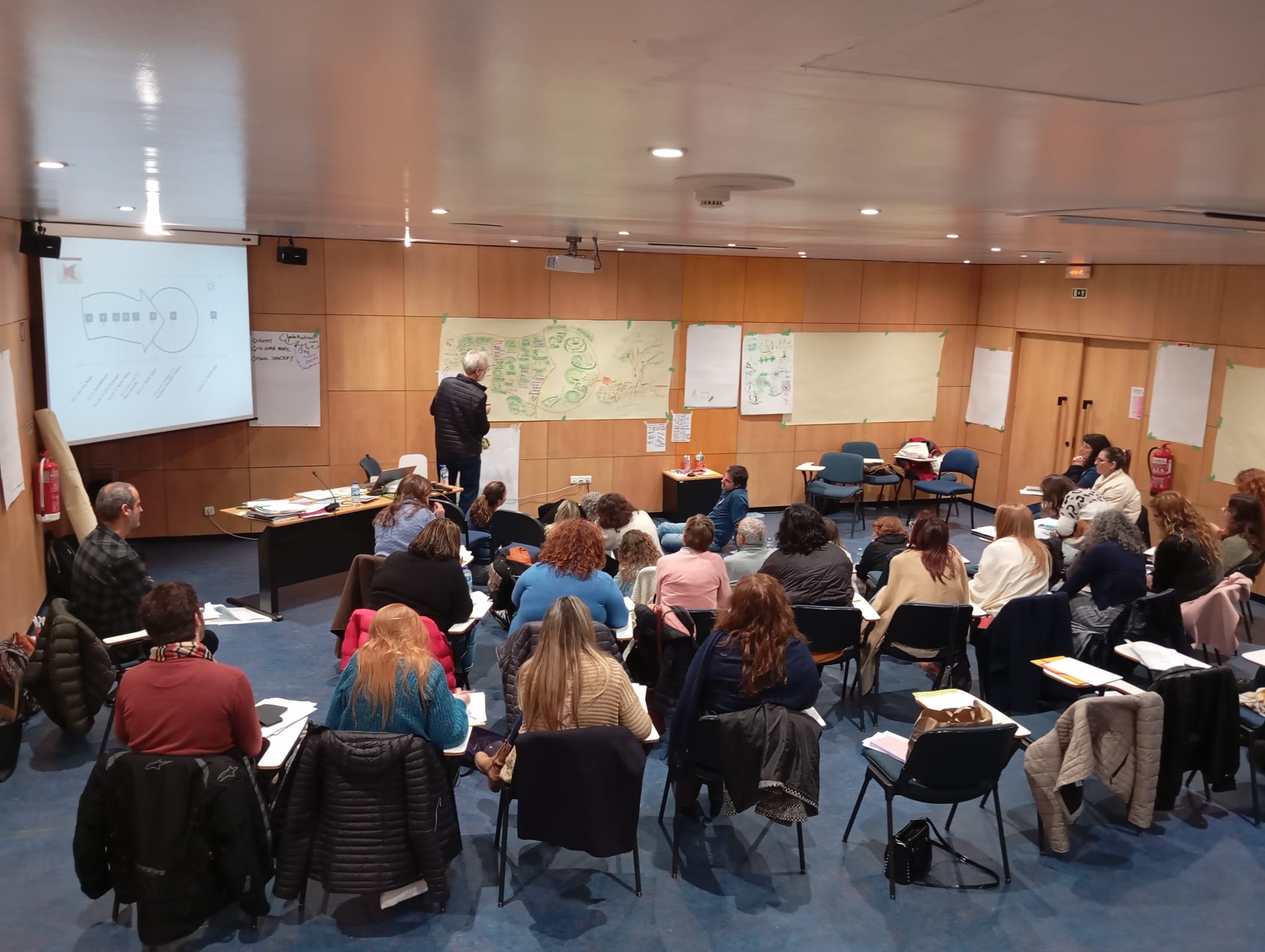

Selo — Espaços Culturais Acessíveis e Inclusivos (SECAI).
Foi publicada, dia 5 de dezembro, a Portaria n.º 432/2025/1, de 5 de dezembro , que cria o Selo — Espaços Culturais Acessíveis e Inclusivos (SECAI). Este novo selo distingue os espaços culturais que asseguram boas condições de acessibilidade física, digital e comunicacional, promovendo uma oferta cultural verdadeiramente inclusiva para todas as pessoas. O SECAI abrange duas categorias de espaços culturais e pode ser atribuído em três níveis — Bronze, Prata e Ouro — consoante o cumprimento dos requisitos definidos no regulamento. As entidades públicas e privadas responsáveis por espaços culturais podem apresentar candidatura através do Portal gov.pt, submetendo a documentação prevista no regulamento. O INR, I.P. divulgará nos seus canais oficiais a lista atualizada dos espaços distinguidos com o selo.
View highlight details Beach + Accessible Award 2025 - Dissemination of Results
The results of the 17th edition of the Praia + Accessible Award are now available. The Jury of the Praia + Accessible Award – composed of representatives of the National Institute for Rehabilitation, I.P., which chairs, the Portuguese Environment Agency, I.P., Turismo de Portugal, I.P., the Associação Bandeira Azul do Ambiente e Educação and the sponsor of the Award, the company IACESS, Lda. – decided to give the following classification: 1st Prize Coastal Beach - São Lourenço Beach, Mafra Municipality; 1st Prize Praia Interior – Praia da Fraga da Pegada, from the Municipality of Macedo de Cavaleiros. Consult HERE For more information about this award.
View highlight details 
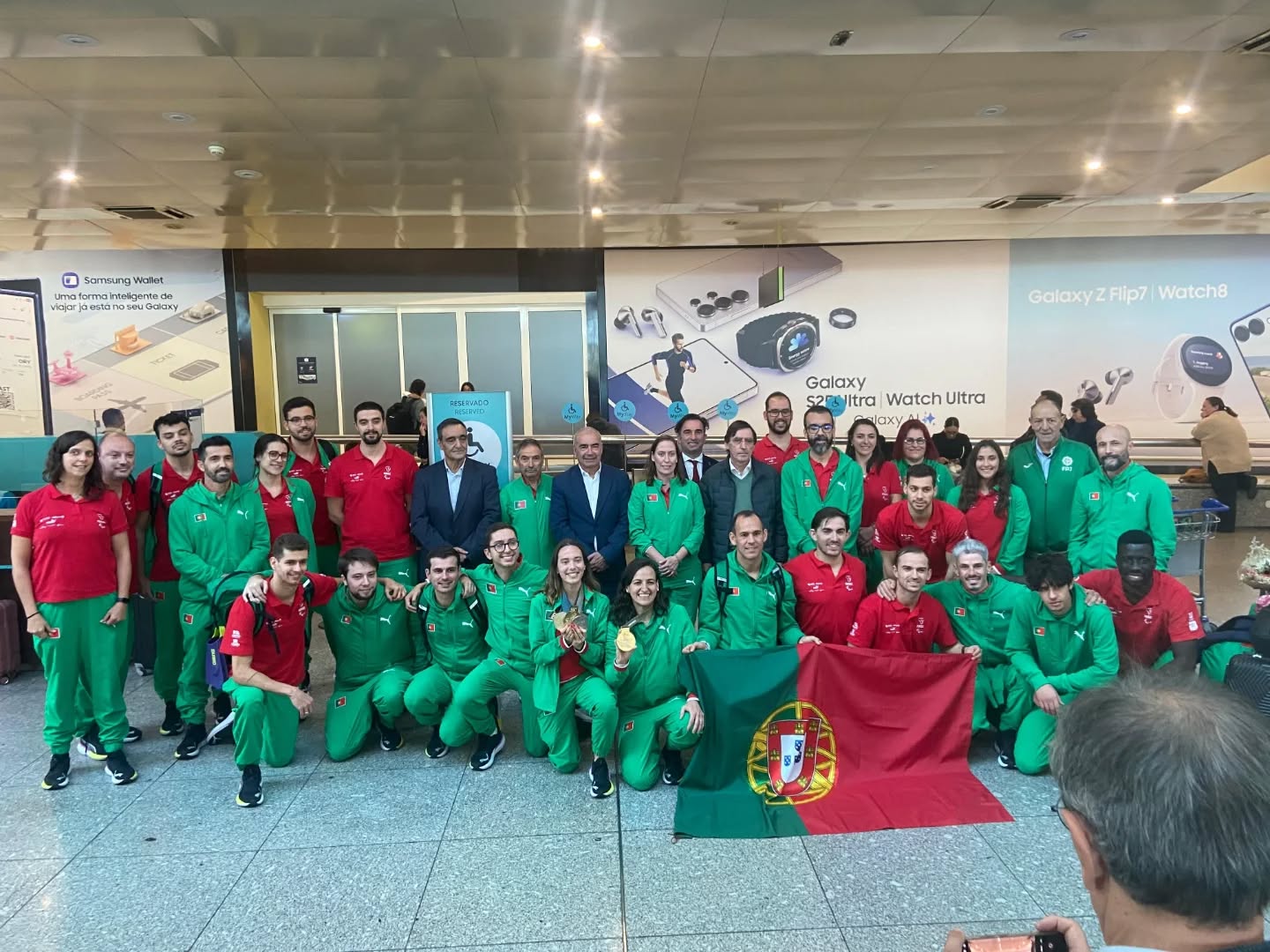
Tokyo2025 Deaflympics - Portuguese participation awarded with 6 medals and 2 diplomas!
The Tokyo 2025 Deaflympics , which took place between 15 and 26 November, brought together around 3,000 hearing-impaired athletes from around 80 countries competing in 21 sports. This important event marks the centenary of this multi-sport event, whose first edition took place in 1924. Our country participated for the ninth time in this competition, since its debut in Sofia in 1993, having won since then a total of 19 medals (eight gold, four silver and seven bronze). Portugal was represented with 13 participants, who competed in five modalities: athletics, cycling, judo, swimming and shooting. National athletes compete in athletics, with five – Francisco Laranjeira, Gustavo Pereira, Hemilton Costa, Margarida Silva and Ricardo Gomes. In swimming, with four — Diogo Neves, Miguel Cruz, Ricardo Belezas and Tiago Neves. In cycling, André Soares, who won two medals in the last edition of the competition contested in Caxias do Sul, Brazil, in 2022, and João Marques will defend the national colors, while in judo will mark the presence of Joana Santos, who has four medals in Deaflympics in the palmarés. Nuno Esteves will be our representative in the shooting. Portugal has won six medals: three gold medals, two silver and one bronze at the Tokyo 2025 Deaflympics, in what was his best performance ever, especially Margarida Silva, André Soares and Joana Santos. Margarida Silva won two gold medals and one silver in athletics, André Soares one silver and one bronze in cycling and Joana Santos one gold in judo. In athletics the three medals were all obtained by Margarida Silva, gold in the 800m and 5,000m and silver in the 1,500m. In cycling, André Soares won the silver medal in the individual time trial and was bronze in the points race. In judo was Joana Santos who also contributed to the huge participation of the Portugal team in Tokyo and was in evidence by snatching gold in the -57kg category, revalidating the title achieved three years ago in Caxias do Sul, Brazil. Also worth mentioning are the athletes Francisco Laranjeira, who was fourth in the 5,000 meters and João Marques was seventh in the road race, in the distance of 100 kilometers. Both have secured two deaflympic diplomas. This sporting event, held every four years, is organized by the International Committee of Sport for the Deaf (ICSD), was created in 1924 and in 1955 was admitted by the International Olympic Committee (IOC) as an international federation. The Tokyo2025 edition was the centenary games. To participate in the Games, athletes must have lost 55 decibels in their "best ear", not being allowed to use any hearing aids or implants. The host city of the 2029 Summer Olympics for the Deaf has not yet been defined, with Athens, Greece, and Zagreb, Croatia, the candidate cities. CREDITS OF THE IMAGE: PARALIMPIC COMMITTEE OF PORTUGAL
View highlight details Segurança Social Direta - Pedido de Subsídio de Educação Especial
Já pode pedir o Subsídio de Educação Especial online, através do Portal da Segurança Social, de forma simples e rápida, sem necessidade de deslocação a um balcão de atendimento. Este subsídio é um apoio financeiro destinado a crianças e jovens até aos 24 anos com deficiência permanente, com o objetivo de ajudar a suportar despesas relacionadas com a frequência de estabelecimentos adequados ou com apoio individual prestado por técnicos especializados. Para efetuar o pedido, basta aceder ao menu: Família > Deficiência e Incapacidade > Subsídio de Educação Especial > Consultar e pedir Subsídio de Educação Especial , e preencher os dados solicitados. Com esta funcionalidade, é possível: Registar pedidos para apoio individual por técnico especializado ou para frequência de estabelecimento de educação especial; Acompanhar o estado do pedido após o registo; Solicitar o reembolso de despesas com educação especial, tornando o processo mais rápido e eficiente. Este serviço foi criado para oferecer maior comodidade e agilidade, permitindo que se concentre no que realmente importa. Se ainda não está registado/a na Segurança Social Direta, consulte o folheto informativo para saber como fazê-lo. Para mais detalhes sobre o processo, assista ao vídeo explicativo .
View highlight details 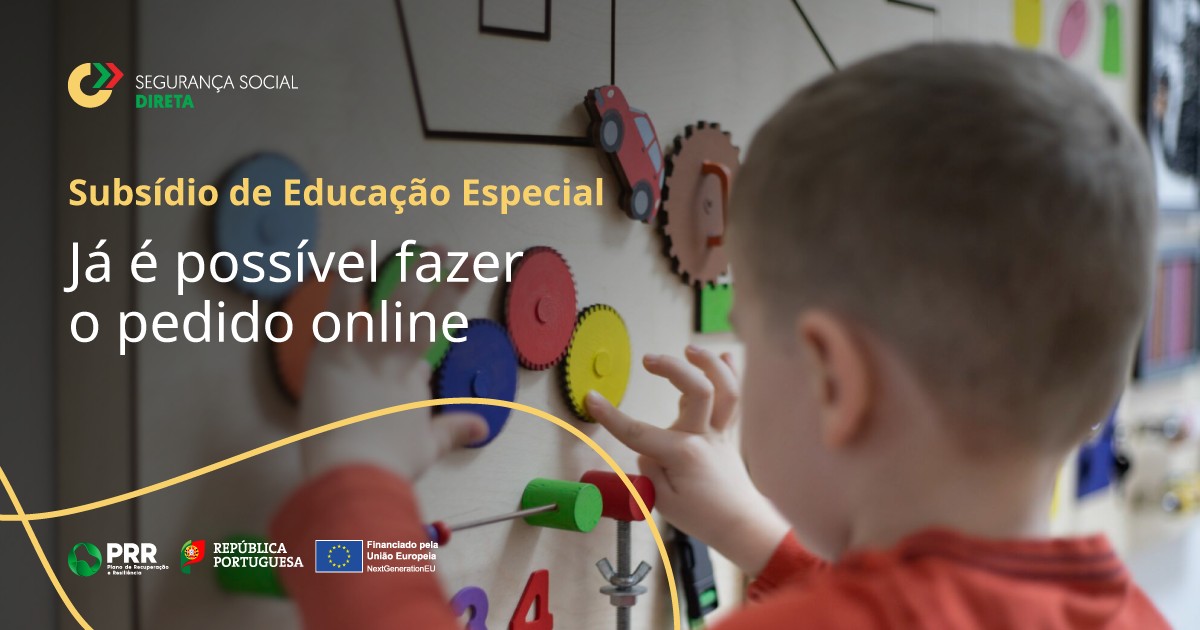

Regulation on financial support for the operation of general NGOPDs published in RD and launch of applications for 2026
The Regulation on financial support for the operation of Non-Governmental Organisations of Persons with Disabilities (NGDOs) of general scope, Regulation No. 1205/2025, was published in the Portuguese Official Gazette (Diário da República) on 3 November. It defines the conditions for accessing, allocating and implementing financial support for the operation, as well as the rules and procedures governing the respective applications and implementation. According to its Article 5, applications for 2026 will run from 15 November to 31 December 2025. A call for applications will be launched on 12 November. Consult the new Regulation HERE .
View highlight details Concurso “Escola Alerta!” 2025/2026 com candidaturas abertas
The ‘School Alert!’ Competition 2025/2026, an initiative of the National Institute for Rehabilitation, I.P., is open to children in Pre-School Education and to students and students in Basic and Secondary Education, to promote projects and ideas that promote inclusion in schools and communities, ensuring that everyone has the opportunity to participate. Applications may be submitted until 28 February 2026. The competition inviting children and young people, with the support of their teachers, to submit projects that integrate the inclusion of persons with disabilities, active citizenship and a culture of non-violence, is organised in three categories: Pre-School Education and 1st Cycle, 2nd and 3rd Cycles and Secondary Education. Projects ranked in the top three places in each category receive financial support – €2,000 for 1st place, €1,000 for 2nd place and €750 for 3rd place – as well as trophies and diplomas. The 2025/2026 edition takes place in the year in which the Single Strategy for the Rights of Children and Youth 2025-2035, approved by the Government in February, was published. The competition aims to involve schools in creating accessible and inclusive educational environments, ensuring learning and participation opportunities for all learners. Established in 2003/2004, ‘Escola Alerta!’ has already involved more than 30,000 students, 4,000 teachers and more than 1,000 schools. In the 2024/2025 edition, 2109 students and 161 teachers from 28 schools from 11 districts participated, with projects on inclusion and accessibility. See the rules and conditions for participation in https://www.inr.pt/escola-alerta For a school where every person counts. For a school where every person makes a difference.
View highlight details 
Quick access to: