



Notícias
Rumo a 2030: Consulta Europeia Define Prioridades para os Direitos das Pessoas com Deficiência
Atualizado: 14/05/2026
Um novo relatório síntese da Comissão Europeia revela que, embora existam avanços legislativos, a implementação prática na vida quotidiana continua a ser o maior desafio. Vida independente, emprego e acessibilidade são as áreas críticas para os próximos cinco anos . A Comissão Europeia publicou recentemente o relatório síntese da consulta alargada para o reforço da Estratégia sobre os Direitos das Pessoas com Deficiência 2021-2030. Este processo, que decorreu entre meados de 2025 e o início de 2026, recolheu contributos de cidadãos, Estados-Membros e organizações representativas (ONG) para ajustar as ações da União Europeia até ao final da década. Os resultados mostram um padrão claro: os cidadãos reconhecem o progresso em termos de normas e leis (como o Ato Europeu da Acessibilidade), mas sentem que estas não se traduziram em mudanças estruturais nas suas vidas. De facto, 52% dos inquiridos avaliam negativamente a evolução da situação nos seus próprios países nos últimos cinco anos. De acordo com os contributos recolhidos, as prioridades máximas para a ação futura da UE são: 1. Vida Independente e Desinstitucionalização : Garantir que o financiamento europeu apoia apenas serviços baseados na comunidade e não modelos de segregação. 2. Emprego de Qualidade : Combater o fosso de emprego que ainda persiste, com foco na transição da educação para o mercado de trabalho e na oferta de adaptações razoáveis. 3. Acessibilidade Universal : Ir além das barreiras físicas, abrangendo transportes, serviços digitais e habitação acessível. Um dos destaques do relatório, vindo diretamente do Diálogo com a Juventude, é a visão da participação política como um pré-requisito fundamental , pois é onde as mudanças acontecem. No entanto, persistem barreiras graves, como a falta de acessibilidade nos processos eleitorais, manifestos em formatos complexos e desafios à capacidade jurídica. Cerca de 12% dos inquiridos consideram que a participação política não melhorou ou até piorou nos últimos cinco anos. O lema "Nada sobre nós, sem nós" continua a ser a base de toda a estratégia. O relatório conclui que não é necessário um novo quadro estratégico, mas sim uma aplicação mais rigorosa e monitorizável do atual, com metas claras e a participação direta das pessoas com deficiência na tomada de decisão. O Instituto para os Direitos das Pessoas com Deficiência, I.P. continuará a acompanhar de perto estas diretrizes para assegurar que Portugal contribui ativamente para uma Europa plenamente inclusiva. Consulte o relatório AQUI . A new European Commission Synthesis Report shows that while legislative progress has been made, practical implementation in everyday life remains the biggest challenge. Independent living, employment and accessibility are the critical areas for the next five years . The European Commission recently published the summary report of the extended consultation to strengthen the Strategy for the Rights of Persons with Disabilities 2021-2030. This process, which ran from mid-2025 to early 2026, gathered input from citizens, Member States and representative organisations (NGOs) to adjust the actions of the European Union by the end of the decade. The results show a clear pattern: citizens recognise progress in terms of standards and laws (such as the European Accessibility Act), but feel that these have not translated into structural changes in their lives. In fact, 52% of respondents negatively assess developments in their own countries over the past five years. According to the contributions collected, the top priorities for future EU action are: 1. Independent Living and Deinstitutionalization : Ensure that European funding supports only community-based services and not segregation models. 2. Quality Employment : Tackling the remaining employment gap, with a focus on the transition from education to the labour market and the provision of reasonable accommodation. 3. Universal Accessibility : Go beyond physical barriers, covering transport, digital services and affordable housing. One of the highlights of the report, coming directly from the Youth Dialogue, is the vision of political participation as a key prerequisite That's where the changes happen. However, serious barriers persist, such as lack of accessibility in electoral processes, manifest in complex formats and challenges to legal capacity. Around 12% of respondents consider that political participation has not improved or even worsened in the last five years. The motto "Nothing about us, without us" remains the basis of the whole strategy. The report concludes that there is no need for a new policy framework, but rather a more rigorous and monitorable implementation of the current one, with clear targets and direct participation of persons with disabilities in decision-making. The Institute for the Rights of Persons with Disabilities, I.P. will continue to closely monitor these guidelines to ensure that Portugal actively contributes to a fully inclusive Europe. Consult the report HERE .
Ver notícia 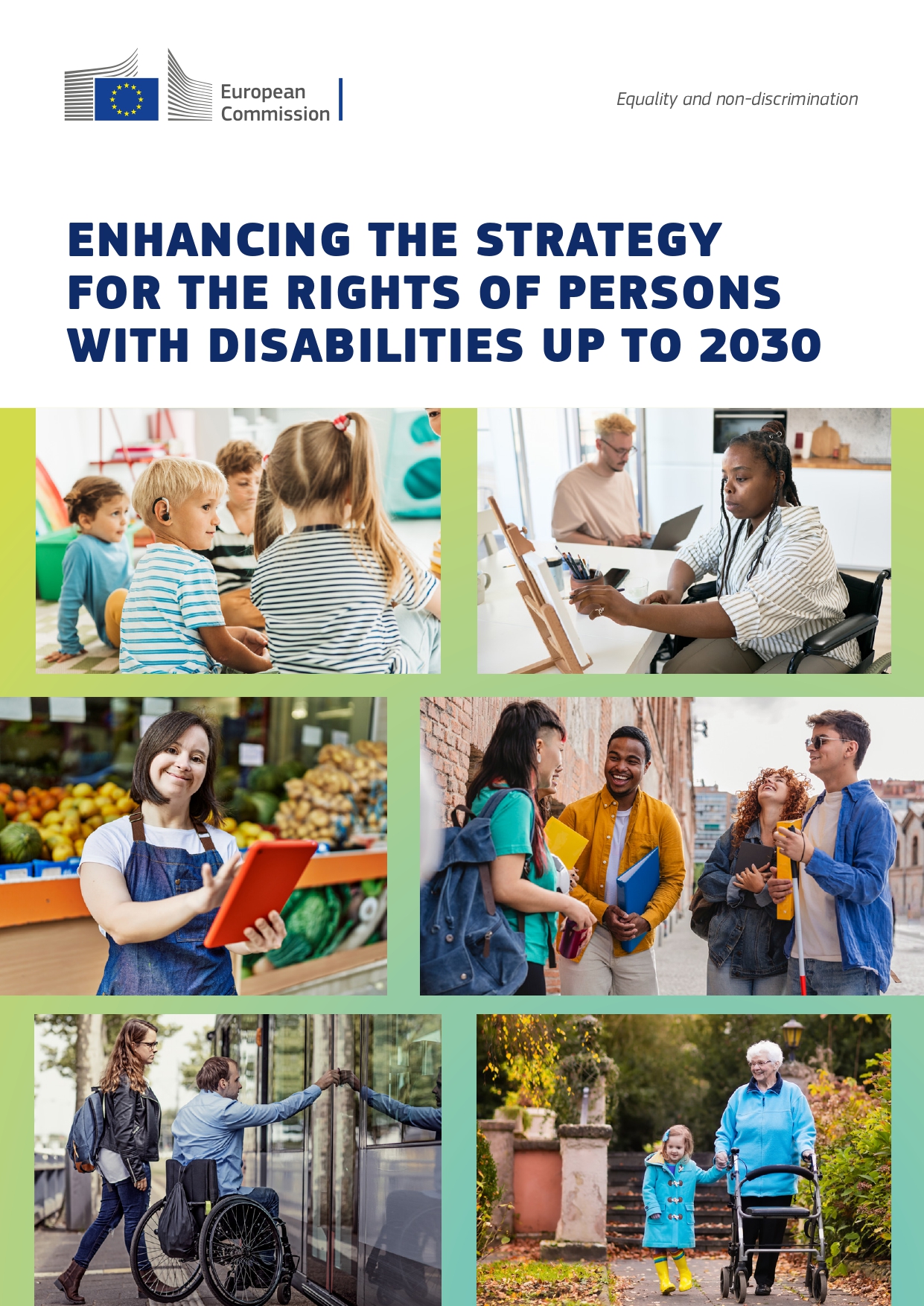
Comissão Europeia reforça Estratégia para os Direitos das Pessoas com Deficiência até 2030
Atualizado: 14/05/2026
No dia 6 de maio de 2026, a Comissão Europeia adotou a Comunicação “ Enhancing the Strategy for the Rights of Persons with Disabilities up to 2030 ”, conforme previsto no seu Programa de Trabalho. A meio do período de implementação da Estratégia 2021–2030, é reconhecido que foram alcançados progressos relevantes ao nível das políticas e do enquadramento europeu. No entanto, persistem ainda barreiras significativas em vários Estados-Membros, que continuam a limitar a participação plena das pessoas com deficiência na sociedade e na economia, em condições de igualdade com os demais cidadãos. Face a este contexto, a União Europeia decidiu reforçar a Estratégia, elevando o nível de ambição e centrando-se, de forma mais clara, na sua implementação efetiva, na concretização de resultados no terreno e no impacto real na vida das pessoas. Este reforço traduz um compromisso renovado com a promoção dos direitos das pessoas com deficiência, com enfoque na eliminação de obstáculos, na igualdade de oportunidades e na construção de uma sociedade mais inclusiva e acessível para todos. O Instituto para os Direitos das Pessoas com Deficiência, I.P. continuará a acompanhar de perto estas diretrizes para assegurar que Portugal contribui ativamente para uma Europa plenamente inclusiva. Aceda à Comunicação AQUI . On 6 May 2026, the European Commission adopted the Communication “ Enhancing the Strategy for the Rights of Persons with Disabilities up to 2030 ”, as provided for in its Work Programme. Halfway through the implementation period of the 2021-2030 Strategy, it is recognised that relevant progress has been achieved at the level of policies and the European framework. However, significant barriers still persist in several Member States, which continue to limit the full participation of persons with disabilities in society and the economy on an equal basis with other citizens. Against this background, the European Union has decided to strengthen the Strategy by raising the level of ambition and focusing more clearly on its effective implementation, delivery of results on the ground and real impact on people's lives. This reinforcement reflects a renewed commitment to promoting the rights of persons with disabilities, with a focus on removing barriers, equal opportunities and building a more inclusive and accessible society for all. The Institute for the Rights of Persons with Disabilities, I.P. will continue to closely monitor these guidelines to ensure that Portugal actively contributes to a fully inclusive Europe. Access the Communication HERE .
Ver notícia 
Cerimónia de Entrega do Prémio Ciências Sociais e Humanas para a Inclusão
Atualizado: 07/05/2026
O Instituto para os Direitos das Pessoas com Deficiência, I.P. realiza, no próximo dia 19 de maio, entre as 14h30 e as 16h30, a cerimónia de entrega do Prémio Ciências Sociais e Humanas para a Inclusão, que terá lugar no Auditório Orlando Monteiro, em Lisboa. A cerimónia contará com uma mesa redonda dedicada à reflexão sobre o impacto da investigação na promoção da inclusão de Pessoas com deficiência, com participação das autoras e dos autores dos trabalhos, distinguidos nas Categorias A e B, e moderação de Helena Alexandre, Presidente do Júri do Prémio. O Prémio Ciências Sociais e Humanas para a Inclusão, promovido e atribuído pelo Instituto para os Direitos das Pessoas com Deficiência, I.P., é uma iniciativa que nasceu como forma de distinguir trabalhos académicos e de investigação de excelência, no domínio da inclusão das pessoas com deficiência, incentivando a produção e disseminação de conhecimento científico relevante nesta área. Programa 14h00 - Receção de participantes 14h30 - Abertura: Sónia Esperto, Presidente do Conselho Diretivo do Instituto para os Direitos das Pessoas com Deficiência, I.P. 14h40 - Apresentação Técnica do Prémio pela equipa do Prémio Ciências Sociais e Humanas para a Inclusão 14h50 - Mesa Redonda: Reflexão sobre a importância da investigação na promoção dos direitos das Pessoas com deficiência, com participação dos Vencedores e Menções Honrosas e moderação pela Presidente do Júri do Prémio Ciências Sociais e Humanas para a Inclusão 15h50 - Entrega dos Prémios: Entrega de Diplomas de Participação Vencedores e Menções Honrosas 16h10 - Encerramento: Pedro Afonso, Vogal do Conselho Diretivo do Instituto para os Direitos das Pessoas com Deficiência, I.P. 16h20 – Porto de Honra A participação na cerimónia está sujeita a inscrição prévia, que poderá ser feita aqui Aceda ao convite acessível AQUI . The Institute for the Rights of Persons with Disabilities, I.P. will hold, on May 19, between 2:30 p.m. and 4:30 p.m., the ceremony of delivery of the Social Sciences and Humanities Award for Inclusion, which will take place at the Orlando Monteiro Auditorium, in Lisbon. The ceremony will have a round table dedicated to the reflection on the impact of research in promoting the inclusion of people with disabilities, with the participation of authors and authors of the works, distinguished in Categories A and B, and moderation of Helena Alexandre, President of the Jury of the Prize. The Social Sciences and Humanities Award for Inclusion, promoted and awarded by the Institute for the Rights of Persons with Disabilities, I.P., is an initiative that was born as a way to distinguish excellent academic and research work in the field of inclusion of persons with disabilities, encouraging the production and dissemination of relevant scientific knowledge in this area. Programme 2 p.m. - Reception of participants 2.30 p.m. - Opening: Sónia Esperto, President of the Board of Directors of the Institute for the Rights of Persons with Disabilities, I.P. 2.40 p.m. - Technical Presentation of the Prize by the Social Sciences and Humanities for Inclusion Award team 2.50 p.m. - Round Table: Reflection on the importance of research in promoting the rights of persons with disabilities, with the participation of the Winners and Honorable Mentions and moderation by the President of the Jury of the Social Sciences and Humanities Award for Inclusion 3.50 p.m. - Award Delivery: Award of Diplomas of Participation Winners and Honourable Mentions 4:10 p.m. Closure: Pedro Afonso, Member of the Board of Directors of the Institute for the Rights of Persons with Disabilities, I.P. 4.20 p.m. – Port of Honor Participation in the ceremony is subject to prior registration, which can be made here Access the accessible invitation HERE .
Ver notícia 
Programa Nacional de Desporto para Todos – Associativismo 2026/2027
Atualizado: 06/05/2026
Informamos que se encontram abertas as candidaturas ao Programa Nacional de Desporto para Todos – Associativismo 2026/2027, promovido pelo Instituto Português do Desporto e Juventude. Período de candidatura: Até às 17h00 do dia 6 de maio de 2026 O Programa Nacional de Desporto para Todos (PNDpT) visa promover a prática de atividade física e desportiva em todas as faixas etárias e segmentos da população, reconhecendo o desporto como um fator essencial para o desenvolvimento integral dos cidadãos, para a inclusão social e para a melhoria da saúde, qualidade de vida e bem-estar. O PNDpT – Associativismo destina-se a entidades associativas sem fins lucrativos que tenham como missão a promoção e o desenvolvimento da prática desportiva. Este apoio pretende viabilizar projetos a implementar em território continental que contribuam para: • Aumentar os níveis de prática desportiva, formal e não formal; • Diversificar a oferta desportiva existente; • Promover boas práticas no desenvolvimento desportivo. Neste âmbito, destacam-se como segmentos da população prioritários: • Pessoas em situação de vulnerabilidade; • Crianças e jovens; • Seniores (população com 65 ou mais anos). Salienta-se ainda que serão privilegiados programas que complementem a atividade regular das entidades, introduzindo novas dinâmicas e respostas à comunidade. Submissão de candidaturas: As candidaturas devem ser efetuadas através da plataforma de programas do IPDJ, sendo fundamental a leitura integral do Regulamento do PNDpT e da Deliberação do Conselho Diretivo do IPDJ. 📌 Notas importantes: 1. As candidaturas são exclusivamente submetidas online, após registo da entidade e do utilizador no sistema BDU: https://bdu.ipdj.gov.pt/ 2. O registo único deverá ser previamente validado pelo IPDJ. Após validação, o acesso à plataforma SIEC permitirá a submissão da candidatura: https://siec.ipdj.gov.pt/ Apoio ao registo: https://bdu.ipdj.gov.pt/register Para mais informações, por favor, consulte: https://ipdj.gov.pt/-/programa-nacional-de-desportopara-todos-pndpt-associativismo-2026-2027-candidaturas-abertas ou contacte com a técnica desta Direção Regional, Patrícia Viegas, através do telefone 289 891 820 ou e-mail faro@ipdj.pt. We would like to inform you that applications for the National Sports Programme for All – Associativism 2026/2027, promoted by the Portuguese Institute of Sport and Youth. Application period: Until 5 p.m. on 6 May 2026 The National Programme for Sport for All (PNDpT) aims to promote the practice of physical and sporting activity in all age groups and segments of the population, recognising sport as a key factor for the integral development of citizens, for social inclusion and for improving health, quality of life and well-being. The PNDpT – Associativism is aimed at non-profit associations whose mission is the promotion and development of sports. This support aims to enable projects to be implemented in mainland Portugal that contribute to: • Increase levels of sport, both formal and non-formal; • Diversifying the existing sports offer; • Promote good practices in sports development. In this context, the following priority segments of the population stand out: • People in vulnerable situations; • Children and young people; • Seniors (population aged 65 and over). It is also emphasized that programs will be privileged that complement the regular activity of the entities, introducing new dynamics and responses to the community. Submission of applications: Applications must be made through the IPDJ programme platform, and the full reading of the SNEpT Regulation and the Decision of the IPDJ Governing Board is essential. 📌 Important notes: 1. Applications are exclusively submitted online, after registration of the entity and the user in the BDU system: https://bdu.ipdj.gov.pt/ 2. The single registration must be pre-validated by the IPDJ. After validation, access to the SIEC platform will allow the submission of the application: https://siec.ipdj.gov.pt/ Registration support: https://bdu.ipdj.gov.pt/register For more information, please see: https://ipdj.gov.pt/-/programa-nacional-de-desportopara-todos-pndpt-associativismo-2026-2027-candidaturas-abertas or contact the technician of this Regional Directorate, Patrícia Viegas, by calling 289 891 820 or e-mail faro@ipdj.pt.
Ver notícia 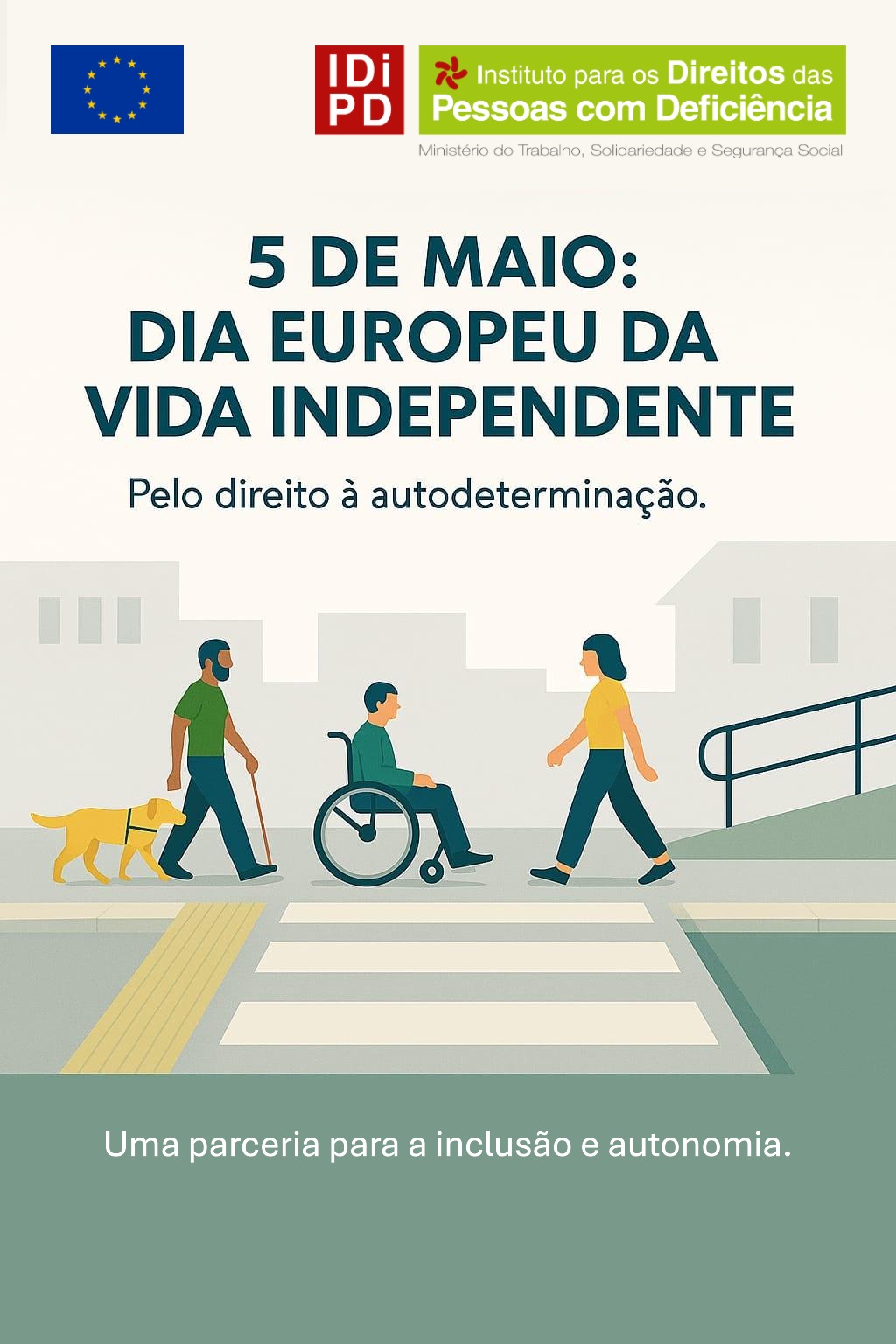
Dia Europeu da Vida Independente
Atualizado: 05/05/2026
Assinala‑se anualmente a 5 de maio o Dia Europeu da Vida Independente, uma data instituída pela ENIL – European Network on Independent Living , com o objetivo de dar visibilidade às reivindicações, aos direitos e às vivências das pessoas com deficiência no espaço europeu. Esta comemoração constitui um momento simbólico de mobilização e sensibilização, enquadrado num percurso mais amplo em que o tema da vida independente , nas suas diversas dimensões — social, económica, cultural e comunitária — tem vindo a afirmar‑se de forma consistente na agenda europeia dos direitos das pessoas com deficiência , influenciando políticas públicas e debates centrados na autonomia, na autodeterminação e na participação na comunidade. A assistência pessoal destaca‑se como um instrumento central na concretização deste direito, estando expressamente consagrada na Convenção sobre os Direitos das Pessoas com Deficiência , nomeadamente no seu artigo 19.º, que reconhece o direito a viver de forma independente e a ser incluído na comunidade. Enquanto apoio individualizado, a assistência pessoal permite às pessoas com deficiência exercer controlo efetivo sobre as decisões do quotidiano e sobre os apoios de que necessitam, constituindo uma condição essencial para a autodeterminação, a liberdade de escolha e o exercício pleno da cidadania. Em Portugal, estes princípios concretizam‑se no Modelo de Apoio à Vida Independente (MAVI) , consolidado como resposta estrutural através da Portaria n.º 415/2023 de 7 de dezembro , e são reforçados pela Estratégia para os Direitos das Pessoas com Deficiência 2026‑2030 , aprovada pela Resolução do Conselho de Ministros n.º 64‑A/2026, de 31 de março . Esta Estratégia assume a vida independente e a autonomia como pilares centrais da política pública, integradas no Eixo de Impacto da Participação Plena e Vida Independente , estabelecendo como objetivo o alargamento do modelo de vida independente a todo o território nacional, o reforço dos apoios personalizados de base comunitária e a prevenção da institucionalização. Alinhada com a Convenção das Nações Unidas e com a Estratégia Europeia para os Direitos das Pessoas com Deficiência 2021‑2030, a EDPD 2026‑2030 afirma‑se como um compromisso estruturante do Estado português com uma abordagem baseada em direitos humanos, evidência e participação ativa das pessoas com deficiência. O Instituto para os Direitos das Pessoas com Deficiência (IDiPD, IP) desempenha um papel determinante na implementação, coordenação e monitorização destas políticas, assegurando a articulação interministerial e o envolvimento dos diversos agentes públicos e privados. Para além da operacionalização das medidas, o Instituto tem vindo a promover a produção e disseminação de conhecimento, bem como a sensibilização da sociedade em geral, contribuindo para uma mudança cultural sustentada que valorize a autonomia, a autodeterminação e a participação plena das pessoas com deficiência. ‑se annually a 5 May the European Day of Independent Living, a date established by the ENIL – European Network on Independent Living , with the aim of giving visibility to the demands, rights and experiences of persons with disabilities in the European area. This commemoration is a symbolic moment of mobilization and awareness, framed in a broader course in which the theme of independent living , in its various dimensions — social, economic, cultural and community — has consistently asserted ‑se European Agenda for the Rights of Persons with Disabilities , influencing public policies and debates focused on autonomy, self-determination and community participation. Personal assistance stands out ‑se as a central instrument in the realization of this right, being expressly enshrined in the Convention on the Rights of Persons with Disabilities , notably in its Article 19.º, which recognises the right to live independently and to be included in the community. As individualised support, personal assistance enables persons with disabilities to exercise effective control over everyday decisions and the support they need, and is an essential condition for self-determination, freedom of choice and the full exercise of citizenship. In Portugal, these principles materialize ‑se in the Support Model for Independent Living (MAVI) , consolidated as a structural response through the Ordinance No º 415/2023 of 7 December 2023 , and are reinforced by Strategy for the Rights of Persons with Disabilities 2026‑2030 , approved by Council of Ministers Resolution No º 64‑A/2026 of 31 March . This strategy assumes a Independent Living and Autonomy as central pillars of public policy, integrated into the Axis of Impact of Full Participation and Independent Living , establishing as an objective the extension of the independent living model to the entire national territory, the reinforcement of community-based personalised support and the prevention of institutionalisation. Aligned with the United Nations Convention and the European Strategy for the Rights of Persons with Disabilities 2021‑2030, EDPD 2026‑2030 affirms‑se as a structuring commitment of the Portuguese State to an approach based on human rights, evidence and the active participation of persons with disabilities. O Institute for the Rights of Persons with Disabilities (IDiPD, IP) plays a decisive role in the implementation, coordination and monitoring of these policies, ensuring inter-ministerial coordination and the involvement of the various public and private actors. In addition to the operationalisation of the measures, the Institute has been promoting the production and dissemination of knowledge, as well as the awareness of society in general, contributing to a sustained cultural change that values the autonomy, self-determination and full participation of persons with disabilities.
Ver notícia 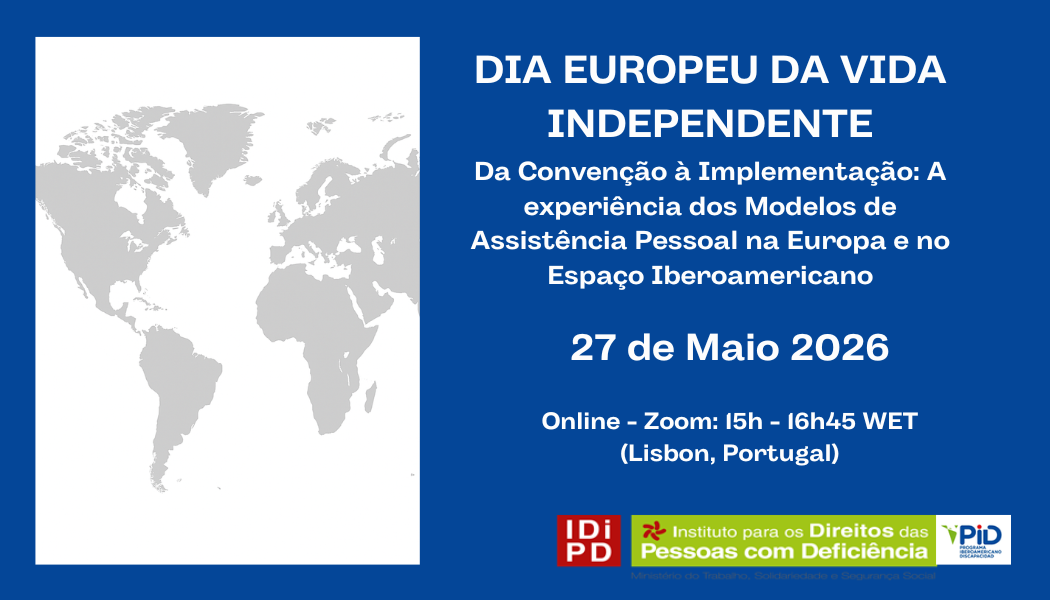
Save the date - Dia Europeu da vida independente
Atualizado: 06/05/2026
No dia 5 de maio de 2026 celebra-se o Dia Europeu da Vida Independente, uma data instituída pela ENIL – European Network on Independent Living, plataforma de âmbito europeu dirigida a pessoas com deficiência ou incapacidade e a organizações promotoras da Vida Independente, cuja principal missão é promover os seus valores e práticas. Neste contexto, o Instituto para os Direitos das Pessoas com Deficiência, IP (IDiPD, IP), em coorganização com o Programa Iberoamericano de Discapacidad(PID), promove o evento online “Da Convenção à Implementação: a experiência dos Modelos de Assistência Pessoal na Europa e no Espaço Iberoamericano”, que decorrerá via Zoom, entre as 15h05 e as 16h40, no dia 27 de maio. O evento tem como objetivo promover a reflexão, o debate e a partilha de experiências internacionais sobre os Modelos de Assistência Pessoal, enquanto ferramenta essencial para a concretização do direito à Vida Independente, consagrado na Convenção sobre os Direitos das Pessoas com Deficiência das Nações Unidas. Durante a sessão terá lugar o painel “A assistência pessoal no âmbito da Convenção sobre os Direitos das Pessoas com Deficiência”, com a partilha de experiências no domínio da assistência pessoal em contexto internacional, onde serão apresentados modelos de assistência pessoal implementados em países representantes do Espaço Iberoamericano e Europeu. A celebração do Dia Europeu da Vida Independente através deste evento constitui uma oportunidade relevante para pessoas com deficiência, organizações da sociedade civil, profissionais e decisores políticos, permitindo aprofundar o conhecimento sobre diferentes abordagens e desafios na implementação efetiva da assistência pessoal, a partir de experiências europeias e iberoamericanas. Mais informações, como o link de participação, serão disponíveis brevemente. Participe e divulgue. 5 May 2026 marks the European Day of Independent Living, a date established by ENIL – the European Network on Independent Living, a Europe-wide platform for people with disabilities and organisations promoting Independent Living, whose main mission is to promote their values and practices. In this context, the Institute for the Rights of Persons with Disabilities, IP (IDiPD, IP), in co-organisation with the Iberoamerican Disability Program (PID), promotes the online event “From Convention to Implementation: the experience of Personal Assistance Models in Europe and the Iberoamerican Space’, which will take place via Zoom between 15:05 and 16:40 on 27 May. The event aims to promote reflection, debate and the sharing of international experiences on Personal Assistance Models, as an essential tool for the realization of the right to Independent Living, enshrined in the United Nations Convention on the Rights of Persons with Disabilities. During the session the panel "Personal assistance under the Convention on the Rights of Persons with Disabilities" will take place, sharing experiences in the field of personal assistance in an international context, where models of personal assistance implemented in countries representing the Ibero-American and European Area will be presented. The celebration of the European Day of Independent Living through this event is a relevant opportunity for persons with disabilities, civil society organisations, practitioners and policy makers, allowing to deepen the knowledge on different approaches and challenges in the effective implementation of personal assistance, from European and Ibero-American experiences. More information, such as the participation link, will be available soon. Participate and spread the word.
Ver notícia