


National Institute for Rehabilitation
Planning, Coordination and Implementation of National Policies for the Promotion of the Rights of Persons with Disabilities
Government approves Strategy for the Rights of Persons with Disabilities 2026-2030 and its Action Plans
The Strategy for the Rights of Persons with Disabilities 2026-2030 and its Action Plans were published in Diário da República, establishing a new framework for the promotion of the rights, inclusion and full participation of persons with disabilities in Portugal. Based on a human rights-based approach, the Strategy reinforces the commitment to removing barriers and building a more accessible, inclusive and equitable society, setting priorities focused on autonomy, equal opportunities and active participation. The Action Plans operationalise these priorities through concrete measures, targets and monitoring indicators, promoting a more articulated and transversal action between public and private entities. Implementation is aligned with the Convention on the Rights of Persons with Disabilities and European priorities in this area. The Institute for the Rights of Persons with Disabilities, I.P. (IDiPD, I.P.) monitors the implementation of the Strategy, ensuring the coordination, monitoring and dynamisation of public policies, as well as the promotion of accessibility, social and professional inclusion and the removal of barriers, in liaison with institutional partners and civil society. The new Strategy is a decisive step towards more effective and result-oriented public policies, contributing to a more inclusive and cohesive society. Consult the official documents: • Strategy: HERE . • Action Plans: HERE .
View highlight details IDiPD joins the "Alliance for Prevention" of UNICEF Portugal
The Institute for the Rights of Persons with Disabilities, I.P. (IDiPD), integrates the "Alliance for Prevention" of UNICEF Portugal from this Thursday, March 26, in a collective call for the adoption of structural measures to prevent and combat violence against children in Portugal. Considering that the "Alliance for Prevention" advocates a new paradigm of prevention of violence against children, mobilizing all sectors of the State and society, for the support of families and effective protection of children, considering that the Convention on the Rights of the Child has in article 23º a specific article on the Rights of Children with Disabilities, and that this articulates with the Convention on the Rights of Persons with Disabilities, in view of our mission, attributions and competences the Institute has joined the Alliance for Prevention because it considers it to be an asset for the monitoring of situations related to children and young people with disabilities who are among the most vulnerable group. UNICEF Portugal has launched, in collaboration with SOS Children's Villages, the Victim Support Association, the Child Support Institute and ProChild CoLAB, the Alliance for Prevention, a collective call for the adoption of structural measures to prevent and combat violence against children in Portugal. The "Alliance for Prevention" advocates a new paradigm of preventing violence against children, mobilizing all sectors of the state and society to support families and effective protection of children.
View highlight details 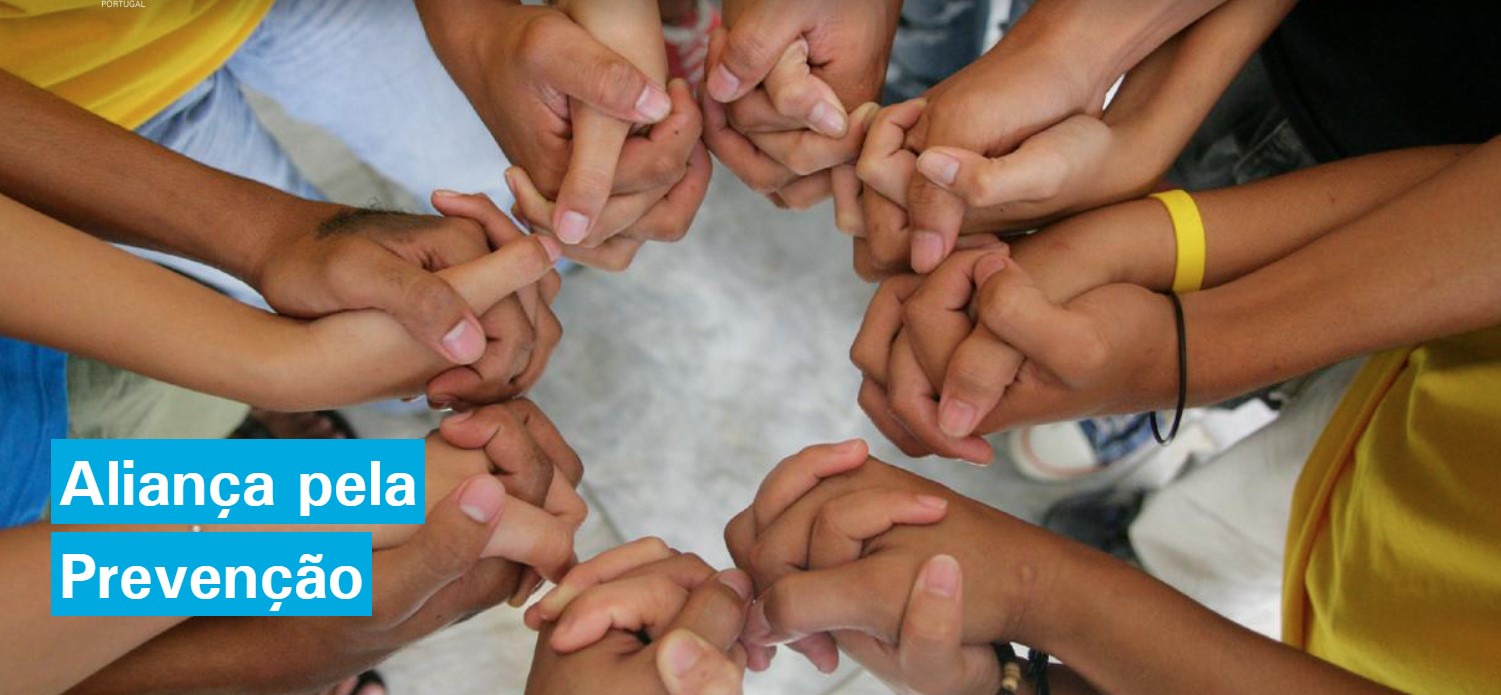
Open Application - National Sports Programme for All
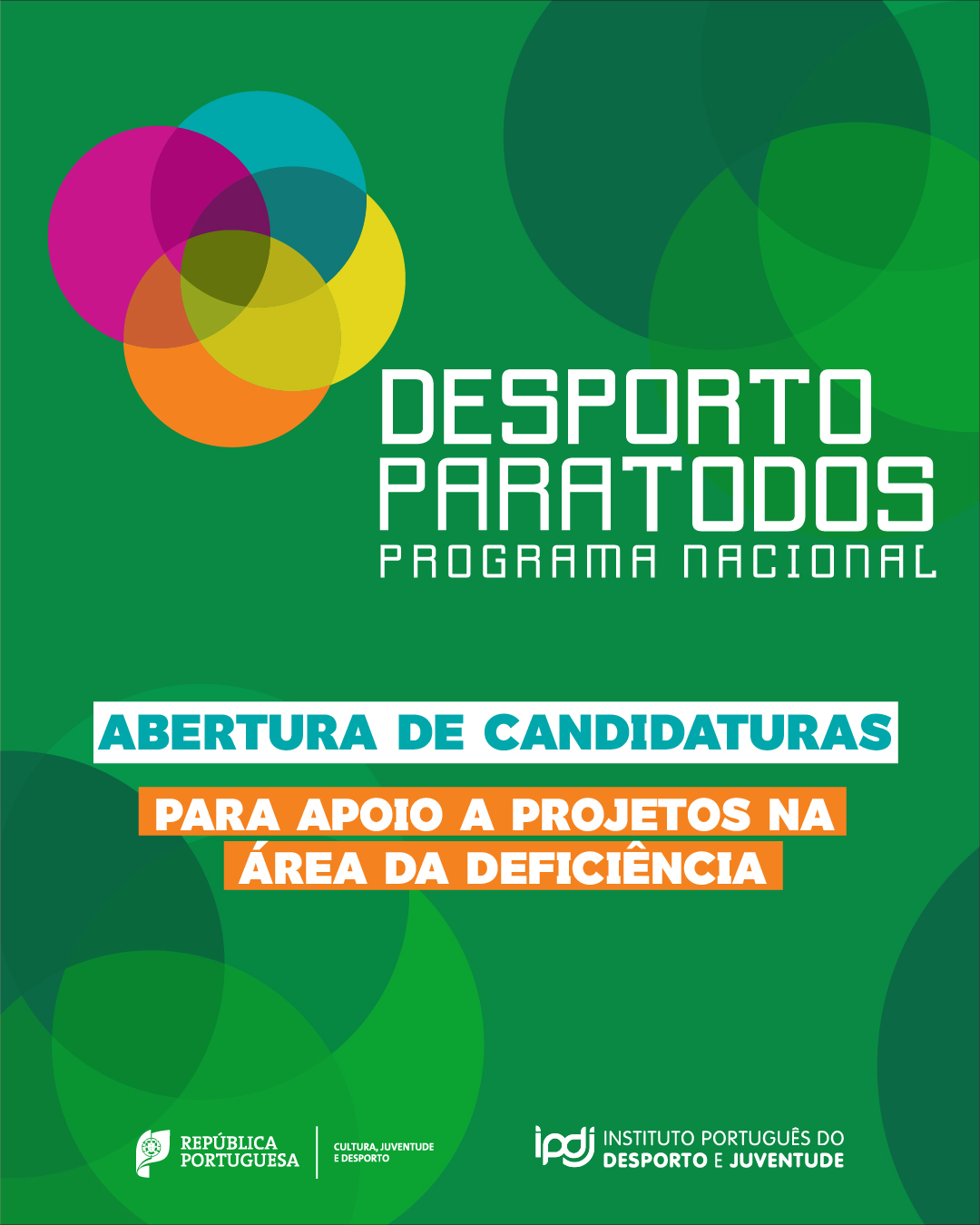
The National Program of Sport for All has applications open, from March 26 to April 16, to support projects developed by sports federations, which aim to contribute to increase the rates of sports practice of people with disabilities. In the development of policies for the inclusion of persons with disabilities, it is essential to guarantee conditions of access and exercise of citizenship rights, through their participation in the various contexts of life, on an equal basis with other citizens. This framework articulates ‑se with the National Strategy for the Inclusion of Persons with Disabilities 2021 ‑2025 (ENIPD 2021 ‑2025) , extended until the entry into force of the new strategy for the period 2026‑2030, which enshrines the promotion of lifelong sport, in all ages and contexts, as a tool for social inclusion and participation. In addition to the recent National Sports Development Plan (PNDD) enshrines inclusion as a relevant axis of national sports policy, with a particular focus on promoting the practice of sport by persons with disabilities, as well as addressing persistent challenges such as accessibility, the adequacy of sports provision and the qualification of human resources. It is in this strategic reference framework that the SNETP - Disability Projects , as a funding instrument already consolidated, promoted by the Portuguese Institute of Sport and Youth, I.P. (IPDJ, I.P.) in partnership with the Institute for the Rights of Persons with Disabilities, I.P. (IDiPD, I.P.). The SNEPT thus aims to strengthen the regular participation of persons with disabilities in sport by supporting sport development projects promoted by sports federations, focusing on inclusive and sustainable approaches, beyond the strictly competitive context. This convergence between policy instruments and funding mechanisms reinforces the commitment to ensure a truly inclusive, accessible and engaged sport, promoting equal opportunities and consolidating sport as an instrument of social cohesion. The 2026 edition, counts with the application period running between the 9 a.m. on 26 March 2026 and 5 p.m. on 16 April 2026 . Go to here to Regulation 1242 - 2024 END pT - Disability Projects Go to here the Deliberation of the Board of Directors of IPDJ - PNDpT - Projects in the area of Disability. Go to here Find out more about the National Sport for All Program.
View highlight details IDiPD participated in the seminar “Life Path without Interruption, is it possible for PCDI?”
O Institute for the Rights of Persons with Disabilities participated in the seminar “Life-course without interruption, is it possible for PCDI?” , held on March 3, at the Cineteatro Municipal João Mota, in Sesimbra. The Institute was represented by Odete Fiuza No Panel 2 – “From Past to Present: Rights that Transform (Historical Changes and Fundamental Rights of Persons with Disabilities in Portugal)”. In his speech, Odete Fiuza highlighted that the Institute for the Rights of Persons with Disabilities, which succeeds the National Institute for Rehabilitation, entered into force on the day 1 March, strengthening the alignment of national policies with Portugal's international commitments, in particular the Convention on the Rights of Persons with Disabilities and the European Strategy for the Rights of Persons with Disabilities 2021-2030 , within the framework of a human rights-based paradigm. He also stressed the role of national strategies as tools for managing and guiding public action , enabling priorities to be set, policies to be articulated and more effective responses to inclusion to be promoted. With regard to National Strategy for the Inclusion of Persons with Disabilities 2021-2025 , indicated that an overall assessment of its impact is not yet possible as it is in place. Preparing for the future Strategy for the Rights of Persons with Disabilities 2026-2030 , Odete Fiuza stressed that the process is being developed in a collaborative way, involving the various governmental areas and the Disability organisations, This will ensure that all actors take ownership of the policy instrument and are actively involved in its implementation. The speech ended with an appeal to the involvement of all institutional actors and civil society implementing the new Strategy, underlining that this collective commitment is essential to promote real social change, with real gains in realising the rights of persons with disabilities and improving their quality of life and their families.
View highlight details 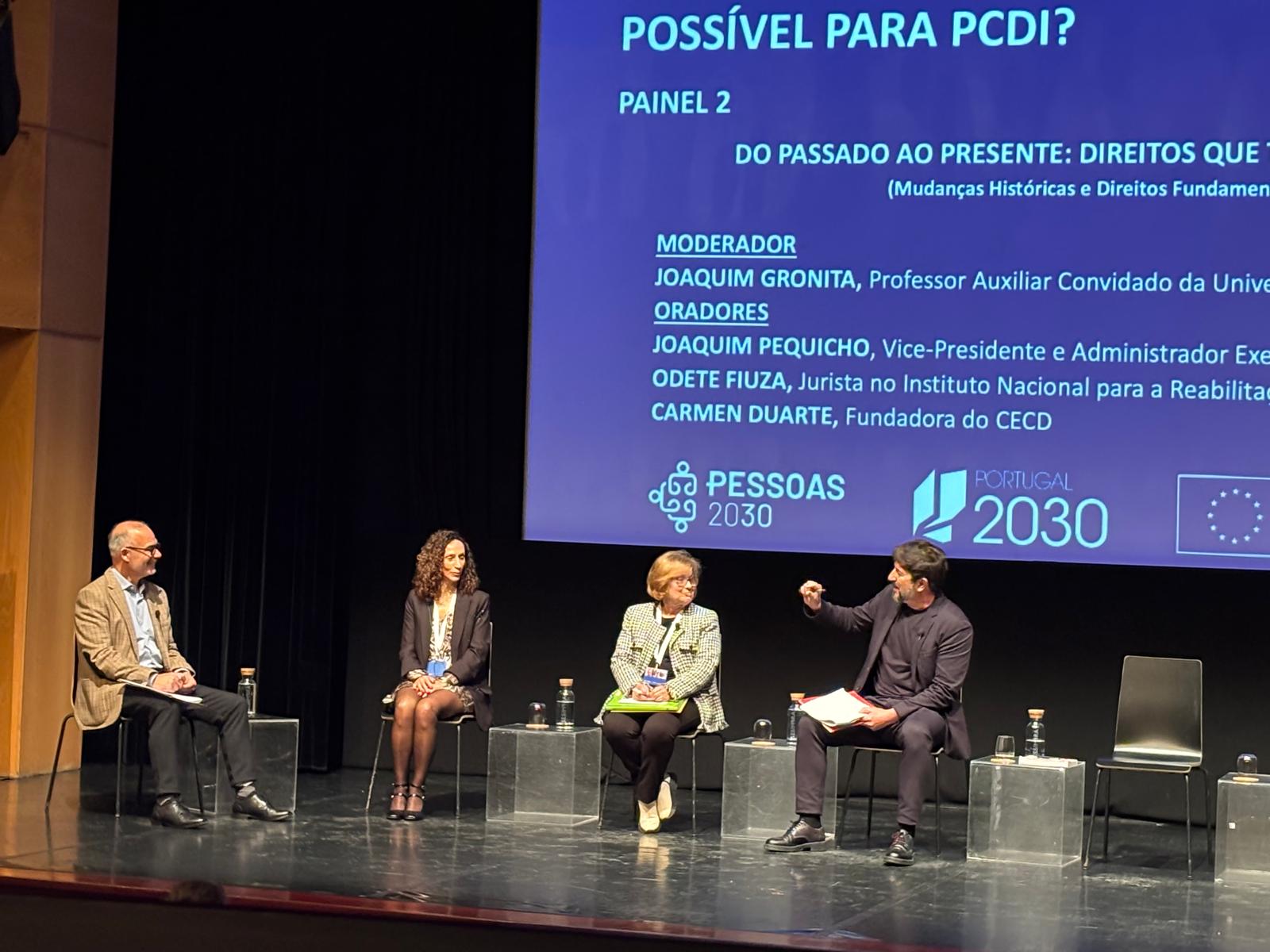
European Commission opens public consultation on the revision of the General Block Exemption Regulation (GBER), with relevance to the disability area
The European Commission has opened the public consultation on the draft revision of the General Block Exemption Regulation (GBER), running from 25 February to 23 April 2026. That regulation defines categories of State aid compatible with the internal market, with a view to the ongoing review, simplifying and updating the relevant scheme. This matter is particularly relevant for entities active in the areas of State aid, social services and employment for persons with disabilities, and it is therefore important to monitor and participate in this public consultation. The project under consultation highlights the provisions concerning the employment of workers with disabilities and the compensation of additional costs associated with their employment and maintenance at work, including the adaptation of premises, the acquisition or adaptation of equipment and software, the use of assistive technologies, transport to the workplace, hiring and training of support staff. The draft also links these measures to the obligation to provide reasonable accommodation under Directive 2000/78/EC. These aspects give particular relevance to this public consultation for the disability sector and organisations representing the area. Access to the public consultation and official documents can be accessed via the European Commission's website: European Commission public consultation on the draft new GBER .
View highlight details Final list of Projects supported under the IDiPD Funding Programme to NGOPDs
The IDiPD Project Finance Programme for 2026 covered a total of 159 NGOPDs who registered 266 projects on the application platform. After completion of the work of the Evaluation Panel and the approval act of the Governing Board of 26 February 2026, the final list of amounts allocated to projects was published on 27 February 2026. In this list, 243 projects were approved for financing with an overall investment of €2 050 000.00, which represents an increase of 36.66% compared to the previous year. Similar to the trend observed over the last few years, most of the approved projects are in the thematic area of artistic, sporting, playful and cultural participation (156), representing 60.08 % of the projects and 48.60% of the total funding. For the areas in which the projects are developed, the following table shows the number of projects and the amount allocated to each of the areas: Number of projects approved and amount involved per thematic area Thematic areas Number of projects Funded amount A – Innovative projects aiming at the inclusion of persons with disabilities 62 (25,51%) €805,925.62 (39.31%) B – Awareness-raising campaigns and actions 19 (7,82%) €113 042.68 (5.51%) C – Artistic, sporting, playful and cultural participation 146 (60,08%) €996,339.91 (48.60%) D – Digital and technological accessibility 16 (6,58%) €134,691.79 (15.5%) Total 243 2,050,000,00€
View highlight details 
TML convida pessoas com deficiência visual a testar novo percurso acessível WayFinding na Gare do Oriente
Para muitas pessoas cegas ou com baixa visão, utilizar os transportes públicos continua a ser um desafio diário. Para promover maior autonomia, conforto e segurança, foi criado um percurso acessível na Gare do Oriente, ligando a estação de metro do Oriente aos cais da Carris Metropolitana. Este trajeto foi desenvolvido para tornar as deslocações mais simples, intuitivas e independentes. E todos estão convidados a experimentá‑lo! Visitas acompanhadas As pessoas cegas ou com baixa visão podem participar em visitas guiadas por Técnicos de Orientação e Mobilidade das associações parceiras. Inscrições disponíveis AQUI . Exploração autónoma Se preferir fazê-lo por conta própria, pode utilizar: - Guia de Apoio ao Percurso Acessível e - Planta de Alto Contraste . Estes recursos foram especialmente concebidos para permitir uma navegação autónoma e segura. A sua opinião é essencial. Ajude-nos a melhorar este percurso e a definir soluções de acessibilidade ainda mais eficazes no futuro. Deixe os seus comentários: Formulário de avaliação do Sistema WayFinding Ou envie um e‑mail para: transportes@tmlmobilidade.pt
View highlight details IDiPD was present at the European Employment and Social Rights Forum
The Institute for the Rights of Persons with Disabilities, I.P., participated in the # in Brussels. EUSocialForum2026 This event reaffirmed the European Union's commitment to strengthening the social dimension, promoting decent employment and guaranteeing fundamental rights for all citizens. The workshops highlighted the importance of public policies focusing on social inclusion, the protection of the most vulnerable groups and the adaptation of social protection systems to the ongoing economic, technological and demographic transformations. The need to combat job insecurity and to ensure fair and sustainable working conditions was also underlined. The Forum also highlighted the key role of dialogue between institutions, social partners and civil society in building shared solutions, promoting more participatory and result-oriented governance. In the area of equality and human rights, particular emphasis was placed on promoting the rights of persons with disabilities, including access to employment, training, culture, accessible tourism and independent living services, as essential pillars for autonomy, full participation and inclusion in society. The conclusions of the EU Social Forum 2026 analysed how we can ensure quality jobs, fair opportunities and effective social protection, while adapting to technological advances, economic pressures and a highly uncertain geopolitical environment. It has also contributed to the prioritisation of the European social agenda by strengthening the commitment to a fairer, more inclusive and sustainable development model, with a focus on people and social cohesion.
View highlight details 

Governo cria bilhete gratuito para acompanhante de pessoa com deficiência em equipamentos culturais públicos
O Governo aprovou o decreto‑lei Decreto-Lei n.º 65/2026 , de 5 de março que cria o bilhete gratuito para o acompanhante de pessoas com deficiência em espetáculos e equipamentos culturais geridos por entidades públicas. A medida tem como objetivo promover a inclusão e a acessibilidade cultural, garantindo que ninguém fica impedido de participar na vida cultural por barreiras económicas ou práticas. A gratuitidade aplica‑se a museus, monumentos, palácios, centros interpretativos e recintos de espetáculos de natureza artística situados em território continental, desde que sejam geridos pela Administração Pública, por entidades do setor público empresarial ou por fundações públicas. De acordo com o diploma, cada pessoa com deficiência tem direito a um bilhete gratuito para um acompanhante por sessão, desde que a deficiência esteja devidamente comprovada. O bilhete do acompanhante é intransmissível e só é válido quando emitido em simultâneo com o bilhete da própria pessoa com deficiência, para a mesma data e horário. A comprovação da deficiência faz‑se, no caso de residentes em Portugal, através do Atestado Médico de Incapacidade Multiuso, com grau de incapacidade igual ou superior a 60%. Para cidadãos estrangeiros, é aceite documentação médica equivalente. O diploma obriga ainda os promotores culturais a adaptarem os sistemas de bilhética, garantindo o registo e o controlo destes bilhetes, o respeito pelas regras de proteção de dados e a disponibilidade do bilhete gratuito em todos os canais de venda, físicos e digitais, com critérios de acessibilidade e usabilidade equivalentes aos restantes bilhetes. A Inspeção‑Geral das Atividades Culturais (IGAC), em articulação com o Instituto para os Direitos das Pessoas com Deficiência ( antigo Instituto Nacional para a Reabilitação), será responsável pela fiscalização da medida e pela elaboração de um relatório anual sobre a sua aplicação, incluindo o número de bilhetes emitidos e o impacto na acessibilidade cultural. As entidades abrangidas dispõem de um ano para adaptar os seus sistemas informáticos, estando previsto um regime transitório que permite, temporariamente, a emissão manual dos bilhetes gratuitos.
View highlight details Institute for the Rights of Persons with Disabilities, I.P. at the Ibero-American Meeting on Disability
Portugal and the Institute for the Rights of Persons with Disabilities, I.P. (IDiPD, I.P.), as national representative in the Ibero-American Program for Disability participated at the invitation of the Ministry of Foreign Affairs, European Union and Cooperation of Spain, to the Ibero-American Meeting for Disability, which took place at that Ministry, on 27 February 2026, in Madrid. The meeting was inaugurated by the Minister of Foreign Affairs, European Union and Cooperation, Mr José Manuel Albares, and was attended by the Ibero-American ambassadors accredited to Spain, and the Ambassador of Portugal accredited to Madrid, Mr José Augusto Duarte, also the Ibero-American Secretary-General and the authorities of the Ibero-American Disability Programme, of which this Institute is part. The meeting made it possible to identify the areas of disability that will be worked on in the framework of the Ibero-American Summit of Heads of State and Government, which will take place on 4 and 5 November 2026 in Madrid, under the motto: "Ibero-America. Together we build our community. Together we project it for the future and for the world". Spain intends to strengthen its foreign policy in the field of the rights of persons with disabilities, for which it created the Embassy in Special Mission for the Convention on the Rights of Persons with Disabilities, becoming one of the two countries that include this figure in its external service around the world. As for the Ibero-American Initiatives for Inclusion and one of the areas of disability that will be worked on at the Madrid Summit will be the implementation of the Ibero-American Disability Card. This aims to recognize the disability condition in the Ibero-American space, thus facilitating access to benefits and services for persons with disabilities during their temporary travels in the region. This instrument, which strengthens "Ibero-American citizenship", will enable 90 million people with disabilities in Ibero-America to enjoy their rights on an equal basis with the rest of the population. This was, moreover, one of the themes addressed in the Agenda of the XIX Meeting of the Intergovernmental Council of the Ibero-American Program for Disability (PID), work that took place under the aegis of our IDID, I.P. as national representative in the Program and Portugal hosted for the first time that meeting, in Lisbon, work- which took place between 24 and 26 February 2026 and whose work took place at the Ministry of Labour, Solidarity and Social Security of Portugal, in Lisbon. During the work of these days it was possible for the motor working group composed of jurists from five Ibero-American countries of the IDP to work, outline and present a draft pilot project of the Ibero-American Disability Card that will be taken to the XXX Ibero-American Summit of Heads of States and Government that will take place in Madrid in November 2026. The Ibero-American Disability Card will facilitate the recognition of rights and access to services for persons with disabilities in Ibero-American countries. This is one of the advances of Ibero-American Disability Program , promoted by Ibero-American General Secretariat (SEGIB), the separate technical unit of which is the ONCE Social Group .
View highlight details 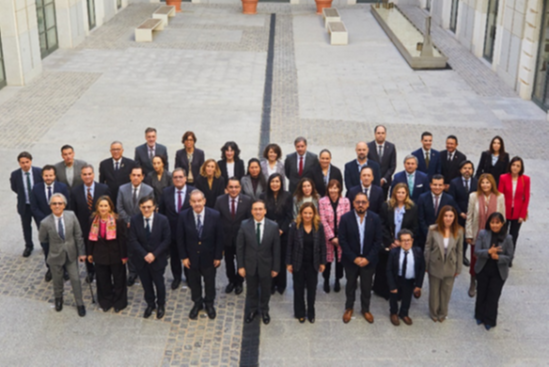
Information | Restructuring of the National Institute for Rehabilitation for the Institute for the Rights of Persons with Disabilities
In the context of the reform of the State and the modernisation of the Public Administration, Decree-Law No. º 60/2026, of 24 February, restructures the National Institute for Rehabilitation, I. P. (INR) and establishes the Institute for the Rights of Persons with Disabilities, I.P. (IDiPD) , which also integrates the competences of the Mission Structure for Accessibility Promotion (EMPA). This amendment aims to strengthen the promotion of the rights of persons with disabilities, ensuring more effective action and better articulation with other public administration services, through an integrated approach in the areas of inclusion, accessibility and civic participation. We would also inform you that all references to the INR and the EMPA, contained in legal and regulatory acts, contracts and other normative instruments, are deemed to be made to the IDiPD. The IDiPD thus becomes the reference entity for all matters previously attributed to EMPA. The Decree-Law can be found here: https://diariodarepublica.pt/dr/detalhe/decreto-lei/60-2026-1058701616 We continue to make inclusion happen together!
View highlight details Quick access to: