


Detalhes da Notícia
INR dinamizou 4.º Fórum "Vida Independente: a Assistência Pessoal na Vida Ativa – Ensino Superior – Coimbra
Atualizado : 15/10/2025
O Instituto Nacional para a Reabilitação, I.P. (INR, I.P.), no âmbito da Estratégia Nacional para a Inclusão das Pessoas com Deficiência (ENIPD 2021-2025), prossegue a realização de um conjunto de fóruns, a nível nacional, para promover a discussão sobre estratégias e medidas de não institucionalização. Em 2025, a temática dos fóruns incide sobre a Vida Independente e o papel que a assistência pessoal desempenha na vida ativa das pessoas com deficiência, procurando envolver e reunir as perspetivas dos destinatários de assistência pessoal, municípios, entidades empregadoras, escolas e universidades.
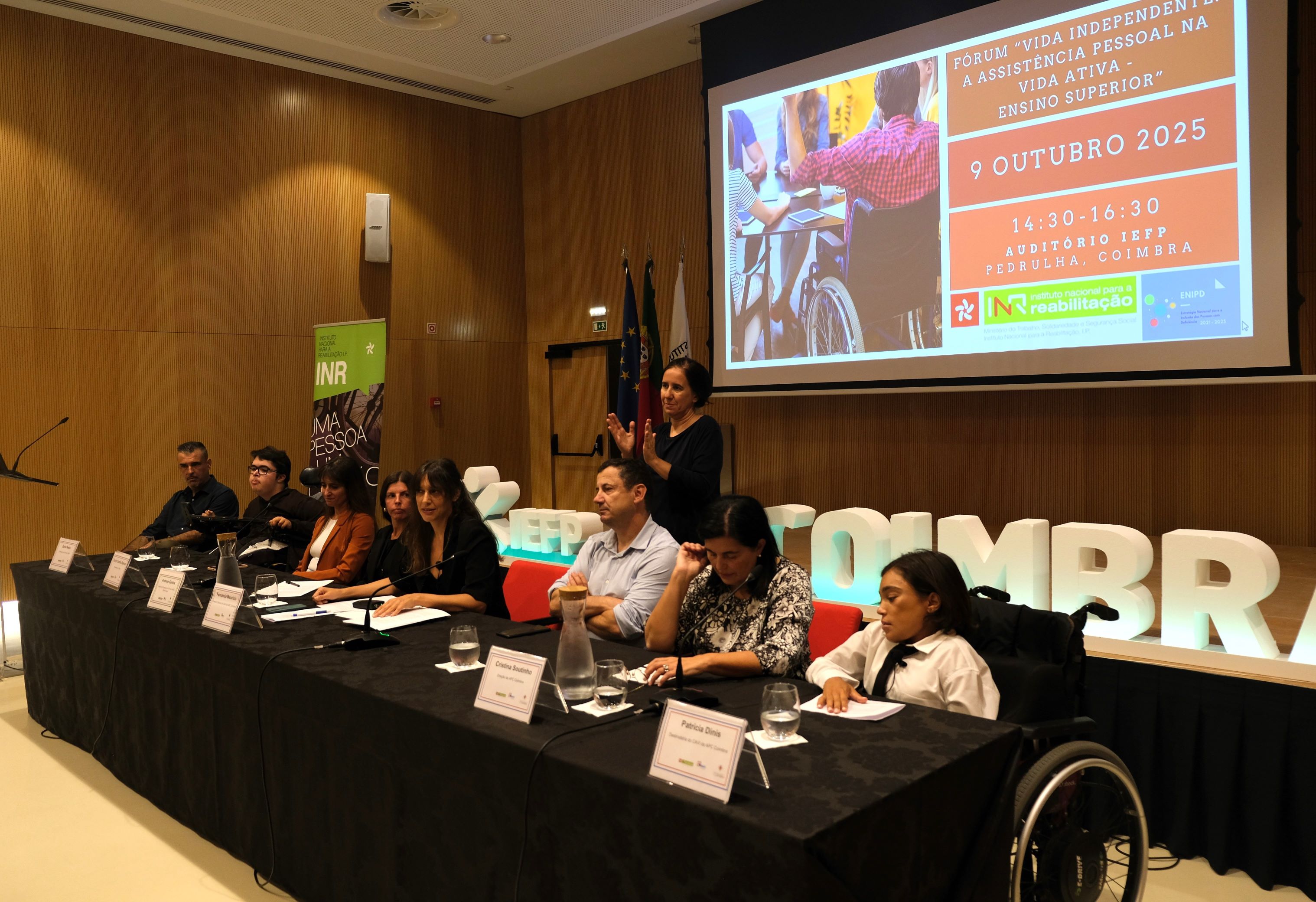
O 4.º Fórum, intitulado “Vida Independente: A Assistência Pessoal na Vida Ativa – Ensino Superior” decorreu no dia 9 de outubro, pelas 14h30, no auditório do IEFP em Coimbra. Com enfoque no Ensino Superior, esta iniciativa procurou dinamizar o diálogo e a partilha de experiências e perspetivas entre os diferentes atores na dinâmica do contexto do Ensino Superior, reunindo representantes institucionais do Município de Coimbra e da Universidade de Coimbra, estudantes com deficiência que recebem assistência pessoal e uma assistente pessoal dos CAVI do CERE, APC Coimbra e Cavalo Azul.
A abertura do evento foi realizada por Ana Cortez Vaz, Vereadora do Pelouro da Ação Social da Câmara Municipal de Coimbra. O painel de oradores contou com a participação de Paulo Peixoto – Pró-Reitor da Universidade de Coimbra, Cristina Soutinho – Vogal da Direção da Associação de Paralisia Cerebral de Coimbra (APCC), Daniela Rodrigues – Coordenadora Técnica do CAVI do Centro de Ensino e Recuperação do Entroncamento (CERE), Andreia Santos – Assistente pessoal do CAVI da Associação de Famílias Solidárias com a Deficiência – Cavalo Azul (AFSD), David Pedro – Destinatário do CAVI do CERE e Patrícia Dinis - Destinatária do CAVI da APCC.
A assistência pessoal foi reconhecida como essencial para garantir a autonomia e inclusão de estudantes com deficiência, permitindo ultrapassar barreiras físicas e sociais no ensino superior. Foram identificados desafios como a burocracia excessiva na atribuição e autorização dos apoios por parte de algumas instituições de ensino a inacessibilidade de edifícios, escassez de residências adaptadas e a falta de transportes acessíveis. A Universidade de Coimbra destacou o seu compromisso com políticas inclusivas e parcerias estratégicas para responder às necessidades da crescente diversidade da comunidade académica.
Os testemunhos evidenciaram o impacto positivo da assistência pessoal na vida académica, nomeadamente ao nível das deslocações, na mediação comunicacional, na orientação espacial e no apoio ao estudo, mas também apontaram limitações como a insuficiência de horas de apoio e a falta de regulamentação da profissão. Foi consensual que iniciar este apoio o mais cedo possível no percurso escolar é crucial para uma adaptação bem-sucedida ao ensino superior.
A assistência pessoal foi consensualmente reconhecida como um recurso essencial para garantir o acesso e a frequência dos estudantes com deficiência no ensino superior em condições de equidade, permitindo-lhes exercer plenamente os seus direitos à educação, à autonomia e à participação ativa na vida académica e social, contribuindo para um percurso universitário mais inclusivo.
O encerramento deste fórum ficou a cargo de Sónia Esperto – Presidente do Instituto Nacional para a Reabilitação, IP.
O próximo fórum será subordinado ao tema "Vida Independente: a Assistência Pessoal na Vida Ativa – Formação Profissional” e irá realizar-se em data e local ainda por definir, em formato presencial.