



Detalhes da Notícia
Dia Europeu da Vida Independente
Atualizado : 05/05/2026
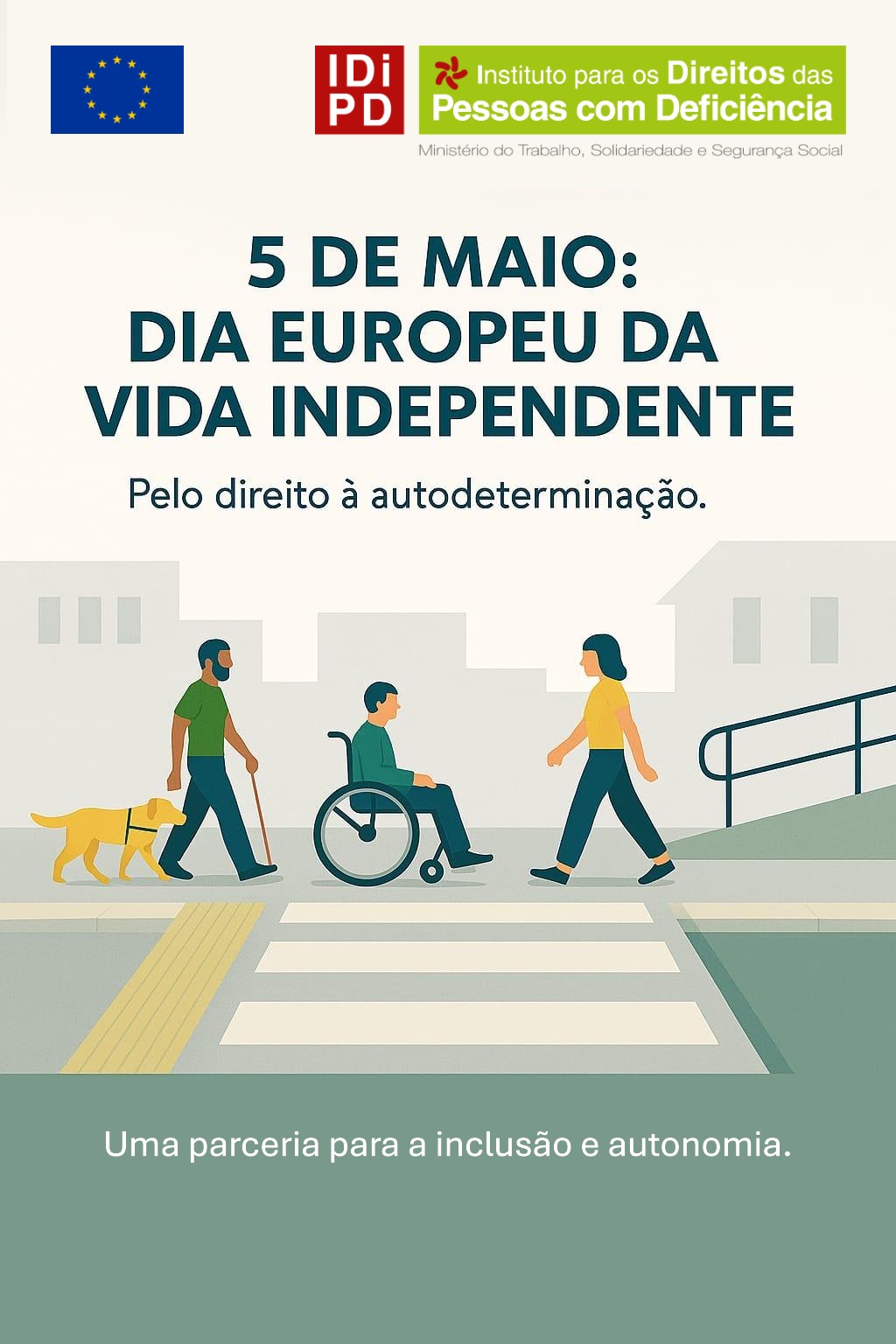
Assinala‑se anualmente a 5 de maio o Dia Europeu da Vida Independente, uma data instituída pela ENIL – European Network on Independent Living, com o objetivo de dar visibilidade às reivindicações, aos direitos e às vivências das pessoas com deficiência no espaço europeu. Esta comemoração constitui um momento simbólico de mobilização e sensibilização, enquadrado num percurso mais amplo em que o tema da vida independente, nas suas diversas dimensões — social, económica, cultural e comunitária — tem vindo a afirmar‑se de forma consistente na agenda europeia dos direitos das pessoas com deficiência, influenciando políticas públicas e debates centrados na autonomia, na autodeterminação e na participação na comunidade.
A assistência pessoal destaca‑se como um instrumento central na concretização deste direito, estando expressamente consagrada na Convenção sobre os Direitos das Pessoas com Deficiência, nomeadamente no seu artigo 19.º, que reconhece o direito a viver de forma independente e a ser incluído na comunidade. Enquanto apoio individualizado, a assistência pessoal permite às pessoas com deficiência exercer controlo efetivo sobre as decisões do quotidiano e sobre os apoios de que necessitam, constituindo uma condição essencial para a autodeterminação, a liberdade de escolha e o exercício pleno da cidadania.
Em Portugal, estes princípios concretizam‑se no Modelo de Apoio à Vida Independente (MAVI), consolidado como resposta estrutural através da Portaria n.º 415/2023 de 7 de dezembro, e são reforçados pela Estratégia para os Direitos das Pessoas com Deficiência 2026‑2030, aprovada pela Resolução do Conselho de Ministros n.º 64‑A/2026, de 31 de março. Esta Estratégia assume a vida independente e a autonomia como pilares centrais da política pública, integradas no Eixo de Impacto da Participação Plena e Vida Independente, estabelecendo como objetivo o alargamento do modelo de vida independente a todo o território nacional, o reforço dos apoios personalizados de base comunitária e a prevenção da institucionalização. Alinhada com a Convenção das Nações Unidas e com a Estratégia Europeia para os Direitos das Pessoas com Deficiência 2021‑2030, a EDPD 2026‑2030 afirma‑se como um compromisso estruturante do Estado português com uma abordagem baseada em direitos humanos, evidência e participação ativa das pessoas com deficiência.
O Instituto para os Direitos das Pessoas com Deficiência (IDiPD, IP) desempenha um papel determinante na implementação, coordenação e monitorização destas políticas, assegurando a articulação interministerial e o envolvimento dos diversos agentes públicos e privados. Para além da operacionalização das medidas, o Instituto tem vindo a promover a produção e disseminação de conhecimento, bem como a sensibilização da sociedade em geral, contribuindo para uma mudança cultural sustentada que valorize a autonomia, a autodeterminação e a participação plena das pessoas com deficiência.